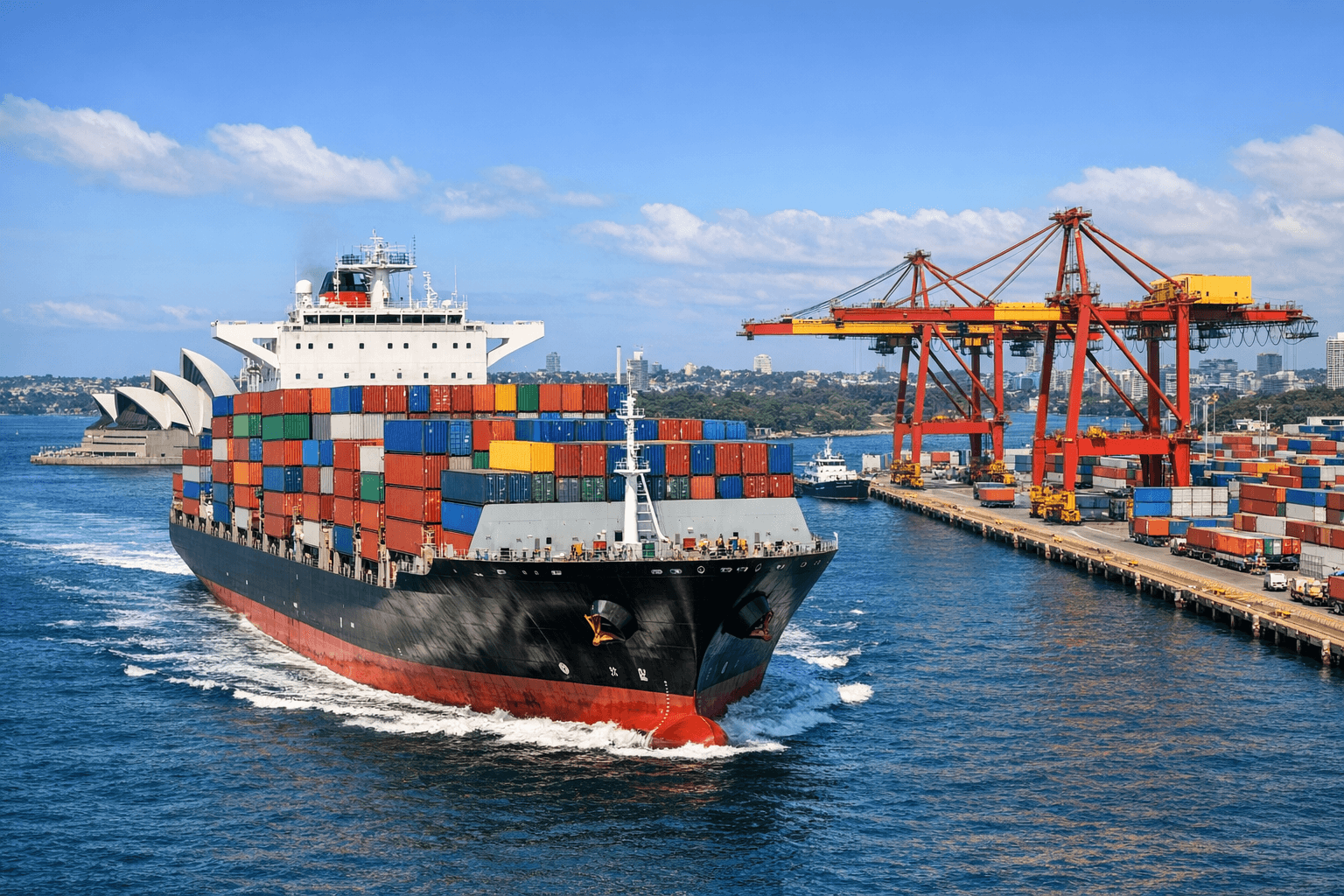
Shipping to Australia in 2026
Australia's stringent biosecurity regime and GST system make it one of the more complex destinations for US exporters. Understanding current requirements is essential to avoid costly delays and destruction of cargo.
Major Australian Ports
Port Botany (Sydney)
- Largest container port, ~40% of Australian trade
- Direct services from US, Asia, Europe
- Gateway to NSW market
Port of Melbourne
- Second-largest port
- Victoria's main gateway
- Strong US connections
Port of Brisbane
- Third-largest, fastest-growing
- Queensland gateway
- Modern facilities with expansion ongoing
Fremantle (Perth)
- Western Australia's port
- Serves mining sector imports
- Longer transit but direct WA access
Transit Times from USA
- LA to Sydney: 20-25 days direct
- LA to Melbourne: 22-28 days
- US East Coast to Sydney: 35-42 days
- Air freight LA/SFO to Sydney: 2-3 days
Biosecurity Requirements
Department of Agriculture (DAFF)
Australia has some of the world's strictest biosecurity rules:
- All timber packaging must be ISPM 15 treated
- Contamination can trigger full shipment fumigation
- Food, plant, animal products heavily regulated
- Used goods require cleanliness certification
Common Biosecurity Issues
- Soil contamination on machinery and vehicles
- Untreated wood packaging
- Cargo pest contamination
- Organic material on containers
- Seeds in grain/food products
Goods and Services Tax (GST)
Standard GST
- 10% on most imports
- Paid at import or via deferred scheme
- Recoverable for GST-registered businesses
- Low-value goods ($0-$1,000 AUD): GST collected by seller
GST Deferral Scheme
- Registered importers defer GST to monthly return
- Cash flow benefit
- Requires ABN and GST registration
- Application through ABF (Australian Border Force)
Customs Clearance Process
Documentation Required
- Commercial invoice with supplier details
- Bill of lading or AWB
- Packing list
- ISPM 15 certificate for wood packaging
- Certificate of origin (FTA claims)
- Specific product certificates (food, cosmetics, etc.)
Import Declaration
- SAC (Self-Assessed Clearance) for under $1,000 AUD
- FID (Full Import Declaration) for commercial imports
- Customs broker typically required for commercial
- Integrated Cargo System (ICS) for filing
Duty Rates and FTAs
Free Trade Agreements
- AUSFTA: US-Australia FTA (most goods duty-free)
- CPTPP, RCEP
- Agreements with Japan, China, Korea, Singapore
- Certificate of origin required for preference
Tariff Rates
- 0-5% on most goods from US under AUSFTA
- MFN rates 0-10% typical
- Specific higher rates on textiles, vehicles
Labeling Requirements
- Country of origin labeling mandatory
- English language required
- Country of origin for food (CoOL)
- Electrical safety marks (RCM)
- Product-specific warnings and instructions
Prohibited and Restricted Goods
- Many food items (dairy, meat, honey restrictions)
- Firearms and weapons (heavily restricted)
- Certain medications
- Protected species/CITES products
- Asbestos (strictly prohibited)
2026 Considerations
Australia's digital Trade Single Window (Trade.gov.au) continues rolling out. Biosecurity fees have increased. Container inspection rates remain high for high-risk origins. Consider:
- Clean containers (verify with steamship line)
- Bulletproof wood packaging compliance
- Pre-clearance services for time-sensitive cargo
- Experienced Australian customs brokers
- Insurance for biosecurity treatment costs