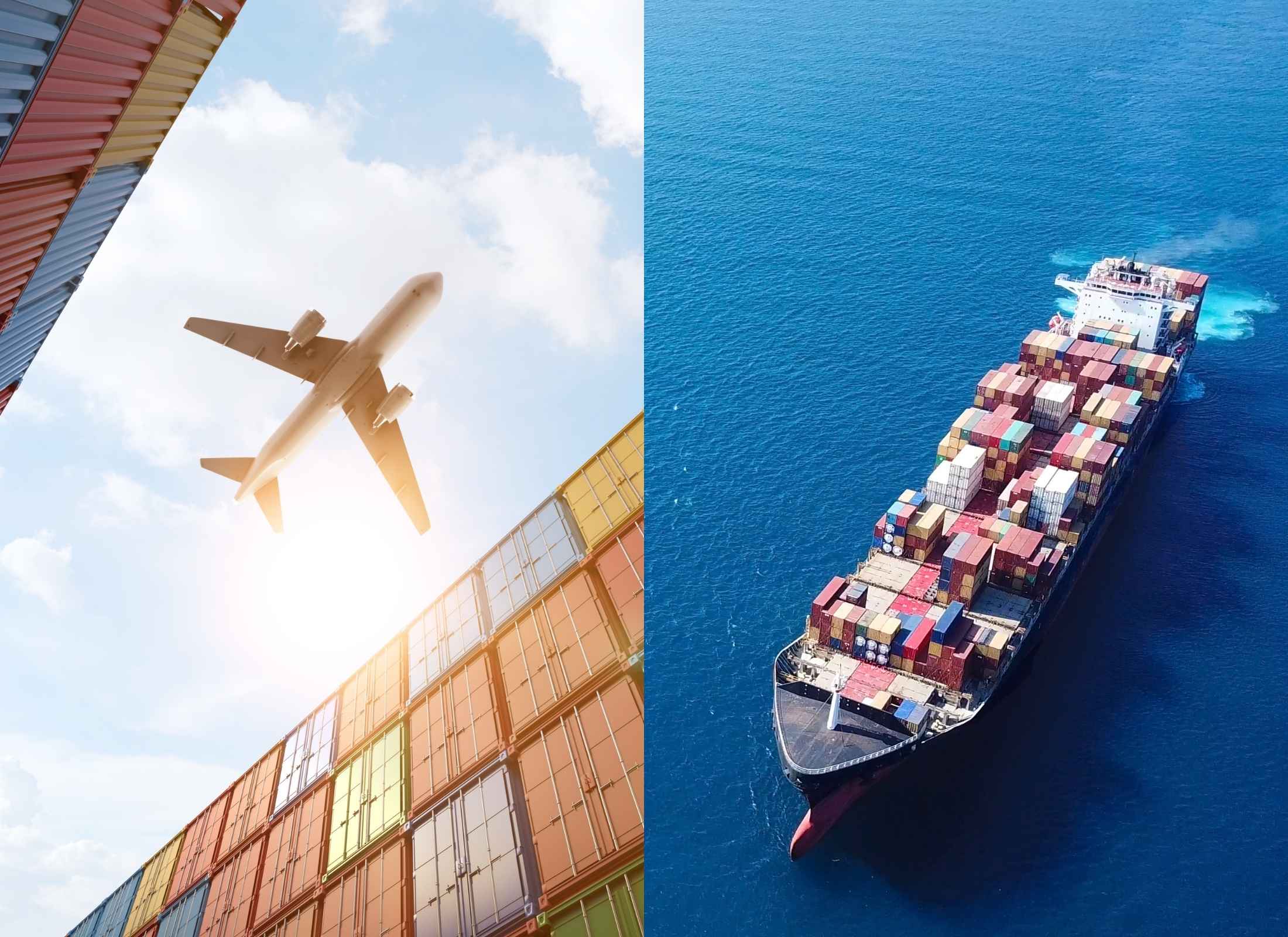
Choosing between ocean and air freight is one of the most fundamental decisions in international shipping. Each mode has distinct advantages, and the right choice depends on your specific needs.
Ocean Freight: The Economical Choice
Ocean freight is significantly cheaper than air freight, typically costing 4-6 times less per kilogram. It's ideal for large shipments, heavy cargo, and goods that aren't time-sensitive.
A standard 40-foot container can hold about 25,000 kg of cargo. Transit times from Asia to the US West Coast range from 14-20 days, while Asia to Europe takes 30-40 days.
Best for: Raw materials, bulk goods, furniture, machinery, and any large shipment where cost matters more than speed.
Air Freight: Speed at a Premium
Air freight gets your cargo there fast - typically 1-3 days for most international routes. It's more reliable with fewer delays and offers better security for high-value items.
However, you pay for that speed. Air freight costs roughly $4-8 per kg compared to $0.50-1.50 per kg for ocean freight.
Best for: Electronics, pharmaceuticals, perishables, fashion/seasonal goods, urgent spare parts, and high-value items.
The Hybrid Approach
Many businesses use a combination of both modes. Sea freight handles regular inventory replenishment while air freight covers urgent orders or unexpected demand spikes.
Consider your inventory carrying costs too. Faster delivery means less capital tied up in transit and lower safety stock requirements.
Making the Decision
Calculate the total cost including freight, insurance, customs fees, and inventory carrying costs. Factor in reliability, your customer expectations, and the nature of your product.
For most businesses, the 80/20 rule applies: 80% of volume goes by sea, 20% by air for time-critical shipments.