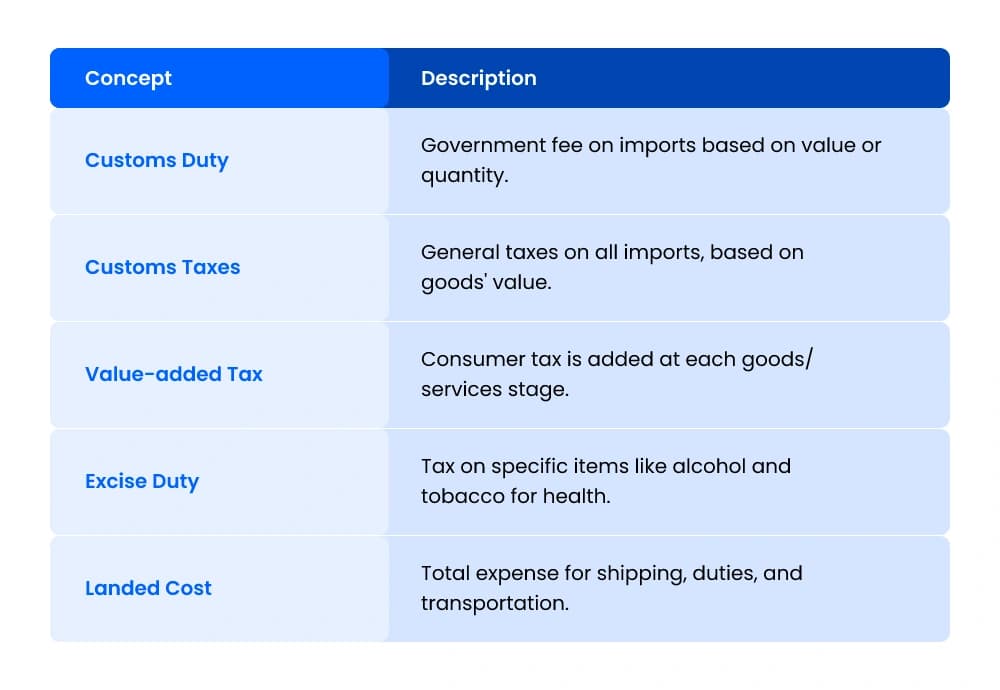
Customs duties are taxes imposed on imported goods. Understanding how they work is essential for accurate cost planning and legal compliance.
How Duties Are Calculated
The basic formula is: Duty = Dutiable Value x Duty Rate
Dutiable Value is typically the transaction value - what you actually paid for the goods, including any assists (tooling, materials provided to the manufacturer) and certain other additions.
Duty Rate depends on two factors: the HTS classification of your product and its country of origin.
HTS Classification
The Harmonized Tariff Schedule assigns a 10-digit code to every product. The first 6 digits are internationally standardized, while digits 7-10 are US-specific.
Classification determines your duty rate and whether any special requirements apply. Get it wrong, and you could overpay, underpay (and face penalties), or miss required permits.
For complex products, consider requesting a binding ruling from CBP. It's free and provides certainty about your classification.
Country of Origin
Where goods were manufactured or substantially transformed determines which duty rate applies and eligibility for trade preference programs.
Products from countries with Normal Trade Relations (NTR) pay standard rates. Products from certain countries face higher rates or special tariffs (Section 301, antidumping duties, etc.).
Free trade agreements like USMCA can reduce or eliminate duties for qualifying goods from member countries.
Strategies for Reducing Duties
Foreign Trade Zones: Defer, reduce, or eliminate duties on imported goods.
Duty Drawback: Claim refunds on duties paid for goods that are re-exported.
Trade Preference Programs: Take advantage of GSP, USMCA, and other agreements.
First Sale Valuation: In some cases, you can use an earlier sale price as the dutiable value.
Correct Classification: Ensure you're not overpaying due to classification errors.