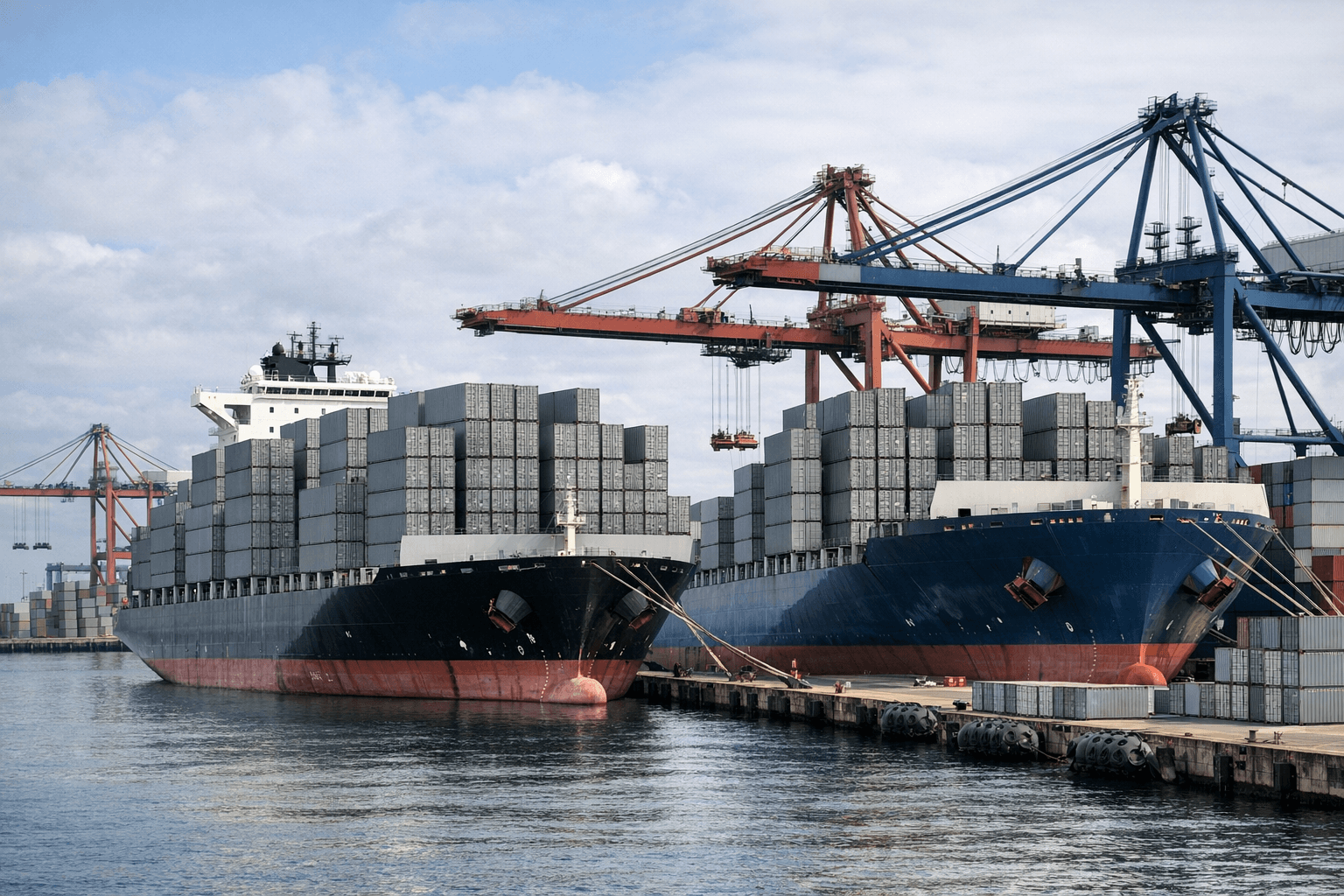
The container shipping industry is facing a significant overcapacity challenge in 2026, creating a market environment that strongly favors shippers in rate negotiations. With fleet growth outpacing demand, freight rates are under sustained downward pressure, offering opportunities for cost-conscious importers and exporters.
Understanding the Overcapacity Situation
Container demand growth is forecast at approximately 3% for 2026, while fleet capacity is expected to grow by 3.6%. This mismatch between supply and demand is the core driver of the overcapacity problem. New ship deliveries will add roughly 1.7 million TEU to the global fleet this year, though this represents a decrease from the 2.1 million TEU delivered in 2025.
Impact on Freight Rates
The rate environment has shifted dramatically in favor of shippers. Average spot rates from the Far East to North Europe have fallen 41% compared to one year ago, while long-term contract rates are down 24%. This trend is expected to continue as overcapacity persists throughout 2026.
How Carriers Are Responding
Ocean carriers are deploying multiple strategies to manage excess capacity and protect their margins. These include blanked sailings where scheduled voyages are cancelled, vessel idling to remove ships from active service temporarily, service suspensions on unprofitable routes, slow steaming to absorb capacity while reducing fuel costs, and scrapping older vessels to permanently reduce fleet size.
Opportunities for Shippers
This market environment presents significant opportunities for shippers. Now is an excellent time to negotiate long-term contracts at favorable rates, explore alternative carriers and routes, lock in capacity commitments while maintaining rate flexibility, and build stronger relationships with carriers who value volume commitments. Smart shippers are using this window to secure advantageous terms that may not be available when the market eventually rebalances.