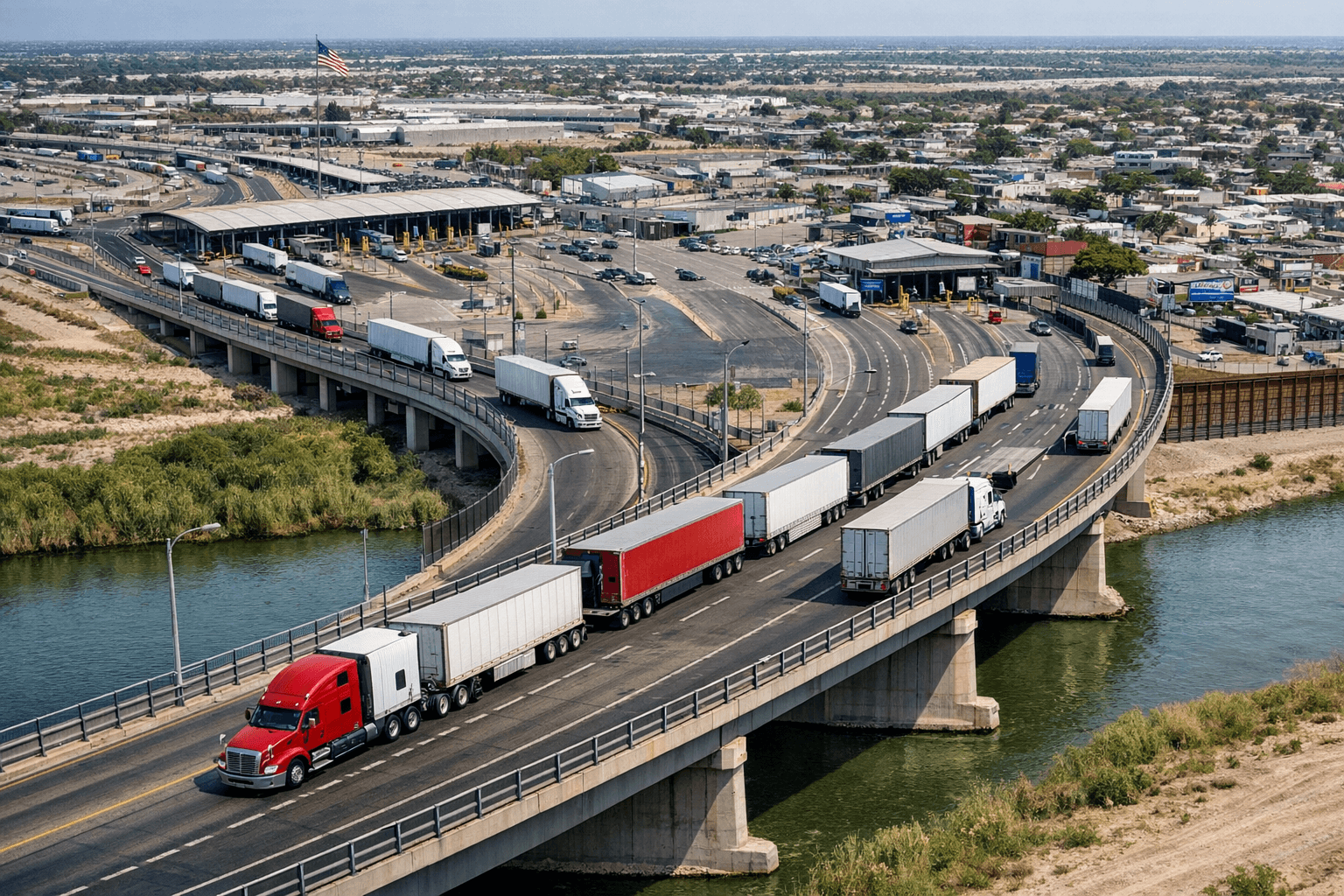
Shipping from Mexico to the United States
Mexico is the United States' largest trading partner, with goods crossing the border daily by truck, rail, air, and ocean. The proximity and USMCA trade agreement make Mexico an attractive sourcing destination.
Transportation Modes
Trucking (Most Common)
The majority of US-Mexico trade moves by truck through land border crossings:
- Laredo, TX: Highest volume crossing, handles 40%+ of US-Mexico truck trade
- El Paso, TX: Major crossing for manufacturing corridor
- Otay Mesa, CA: Primary Pacific coast crossing
- Nogales, AZ: Important for produce and perishables
Transit times from major Mexican manufacturing cities:
- Monterrey to Houston: 1-2 days
- Mexico City to Dallas: 2-3 days
- Guadalajara to Los Angeles: 2-3 days
Rail
Rail is cost-effective for heavy or bulk goods. Major routes connect interior Mexico to US rail networks through border crossings at Laredo and Eagle Pass.
Ocean
Useful for coast-to-coast shipments or when combined with inland transport. Ports include Manzanillo, Veracruz, and Altamira on the Mexican side.
USMCA Benefits
The US-Mexico-Canada Agreement provides duty-free treatment for qualifying goods:
- Products must meet rules of origin requirements
- Certification of origin is required (can be self-certified)
- Most manufactured goods qualify when produced in Mexico
Customs Requirements
Documentation Needed:
- Commercial invoice
- Packing list
- Bill of lading or truck manifest
- USMCA certificate of origin (for duty preference)
- PACA license (for produce)
- FDA prior notice (for food items)
Entry Process:
Mexican goods clear through CBP like any import, but:
- Many qualify for expedited release programs
- C-TPAT certified shippers get priority processing
- Pre-clearance options available for frequent importers
Common Challenges
- Border congestion: Peak seasons and inspection slowdowns cause delays
- Documentation accuracy: Mismatches trigger holds
- Rules of origin: Complex calculations for USMCA qualification
- Security concerns: Additional screening for certain routes
Nearshoring Trend
More companies are moving production to Mexico to:
- Reduce shipping times and costs vs. Asia
- Avoid tariffs on Chinese goods
- Gain supply chain resilience
- Benefit from USMCA duty-free access
Best Practices
- Work with a customs broker experienced in US-Mexico trade
- Verify USMCA qualification before claiming duty preference
- Consider C-TPAT certification for faster processing
- Build relationships with reliable Mexican carriers
- Plan for border crossing variability in your lead times
