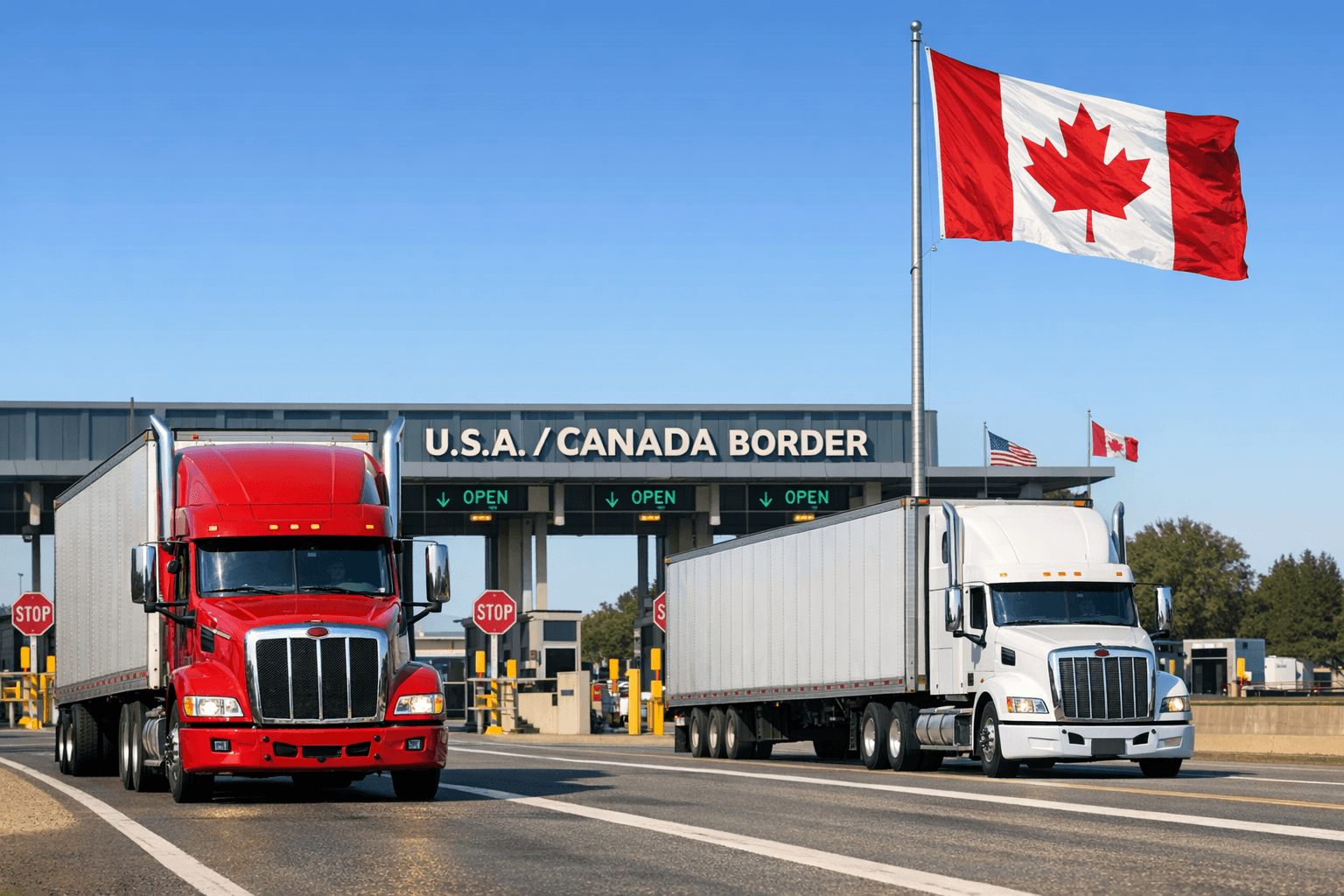
Shipping to Canada from the United States
Canada and the US share the world's longest undefended border and one of the largest trading relationships. Understanding the customs process and USMCA requirements ensures smooth cross-border commerce.
Transportation Options
Ground Transportation
- LTL/Truckload: Most common method for commercial shipments
- Major crossings: Buffalo-Fort Erie, Detroit-Windsor, Blaine-Surrey
- Transit time: 1-5 days depending on origin/destination
Air and Ocean
- Air freight for time-sensitive shipments
- Ocean for bulk/heavy cargo via Canadian ports
USMCA Benefits
The US-Mexico-Canada Agreement provides duty-free treatment for qualifying goods:
- Products must meet rules of origin requirements
- Certificate of origin can be self-certified
- Importer, exporter, or producer can certify
Canadian Customs Requirements
Documentation:
- Commercial invoice with required data elements
- Canada Customs Invoice (CCI) for commercial goods
- USMCA certificate of origin (if claiming preference)
- Packing list
- Bill of lading
Customs Entry Process:
- CBSA (Canada Border Services Agency) processes entries
- Customs broker files entry documentation
- Duties and GST/HST calculated on value
- Release granted after compliance verification
GST/HST on Imports
- Federal GST: 5% on most goods
- Provincial HST: Additional 8-10% in some provinces
- Recoverable as input tax credit for registered businesses
De Minimis Thresholds
- CAD $20: No duty
- CAD $40: No tax
- Above CAD $40: Full duties and taxes apply
Common Challenges
- Labeling requirements (bilingual English/French for consumer goods)
- Product safety standards (different from US)
- Controlled goods regulations
- Border wait times during peak periods
Best Practices
- Work with experienced cross-border carriers
- Verify USMCA qualification before claiming
- Ensure proper labeling compliance
- Consider CBSA's CARM portal for streamlined processing
