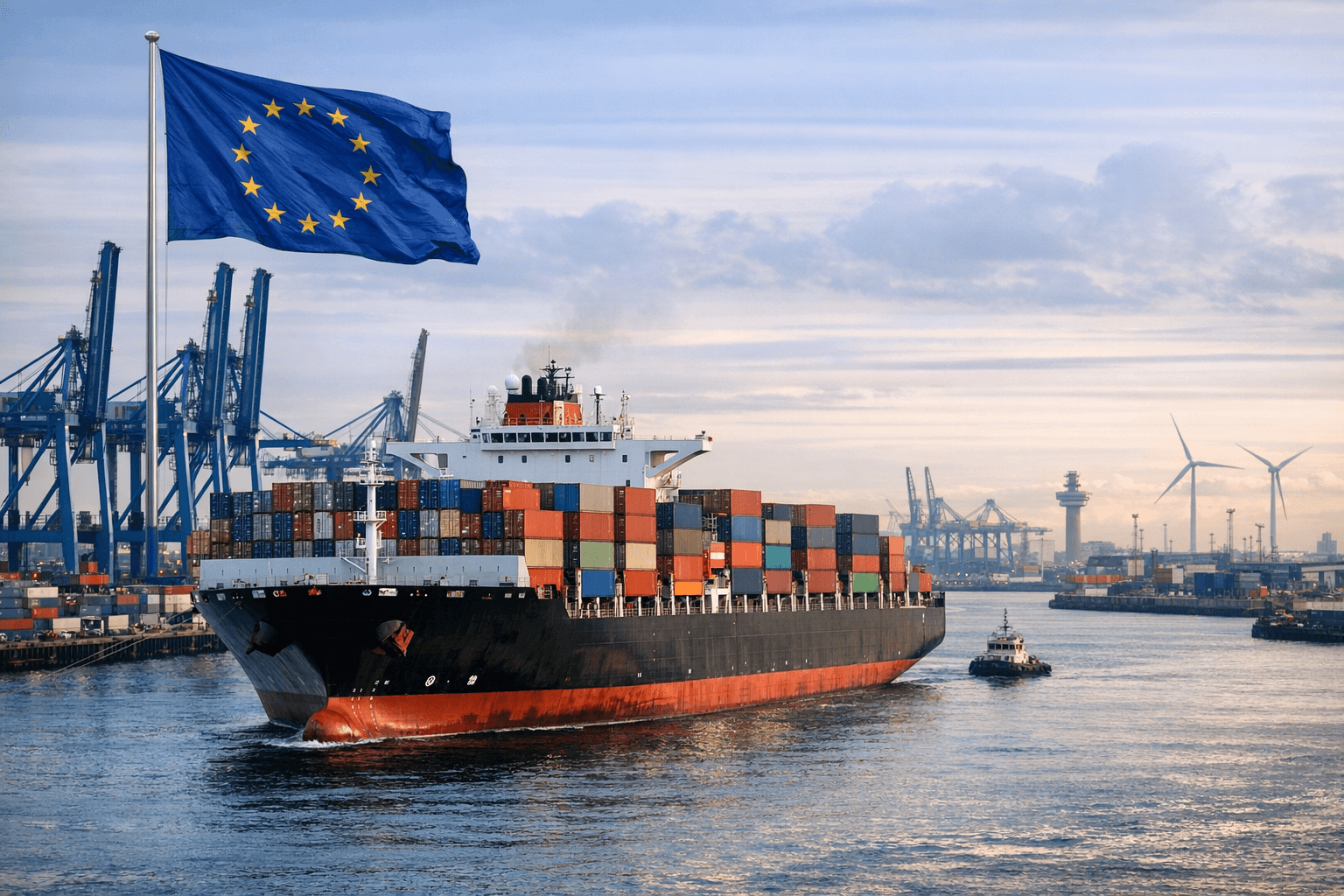
Exporting to the European Union
The EU represents a market of 450 million consumers. While the regulatory environment differs from the US, understanding the requirements opens significant opportunities.
EU Customs Basics
Union Customs Code
- Harmonized customs rules across all EU member states
- Single entry point for entire EU market
- CN (Combined Nomenclature) for tariff classification
Import Duties
- Common External Tariff applies to all third-country imports
- Rates based on CN classification
- Preferential rates under trade agreements (not currently US)
Value Added Tax (VAT)
- VAT applies to imports at destination country rate
- Standard rates: 17-27% depending on country
- Paid at import or via postponed accounting
- Recoverable for VAT-registered businesses
Import One-Stop Shop (IOSS)
- For B2C shipments under €150
- VAT collected at point of sale
- Simplified customs clearance
Product Compliance
CE Marking
- Required for many product categories
- Indicates conformity with EU safety requirements
- Self-declaration or third-party testing required
- Must be in place before import
REACH Regulation
- Chemical registration and restriction requirements
- Applies to substances in products
- Only Representatives needed for non-EU manufacturers
Product Categories with Specific Rules:
- Electronics: RoHS, WEEE directives
- Food: EU food law, labeling requirements
- Cosmetics: EU Cosmetics Regulation
- Medical devices: MDR certification
Documentation Requirements
- Commercial invoice
- Packing list
- Bill of lading/airway bill
- Certificate of origin (if preferential rate applies)
- Conformity documents (CE, test reports)
- EORI number for importer
Customs Entry Process
- Single Administrative Document (SAD) filed electronically
- Customs broker typically handles entry
- Risk-based inspection selection
- Duties and VAT paid or guaranteed
Labeling Requirements
- Country of origin marking
- EU languages as required by destination
- Metric units
- Importer/responsible person identified
Best Practices
- Verify product compliance requirements early
- Establish EU-based importer of record or partner
- Consider VAT registration if selling B2C
- Understand individual country requirements within EU
