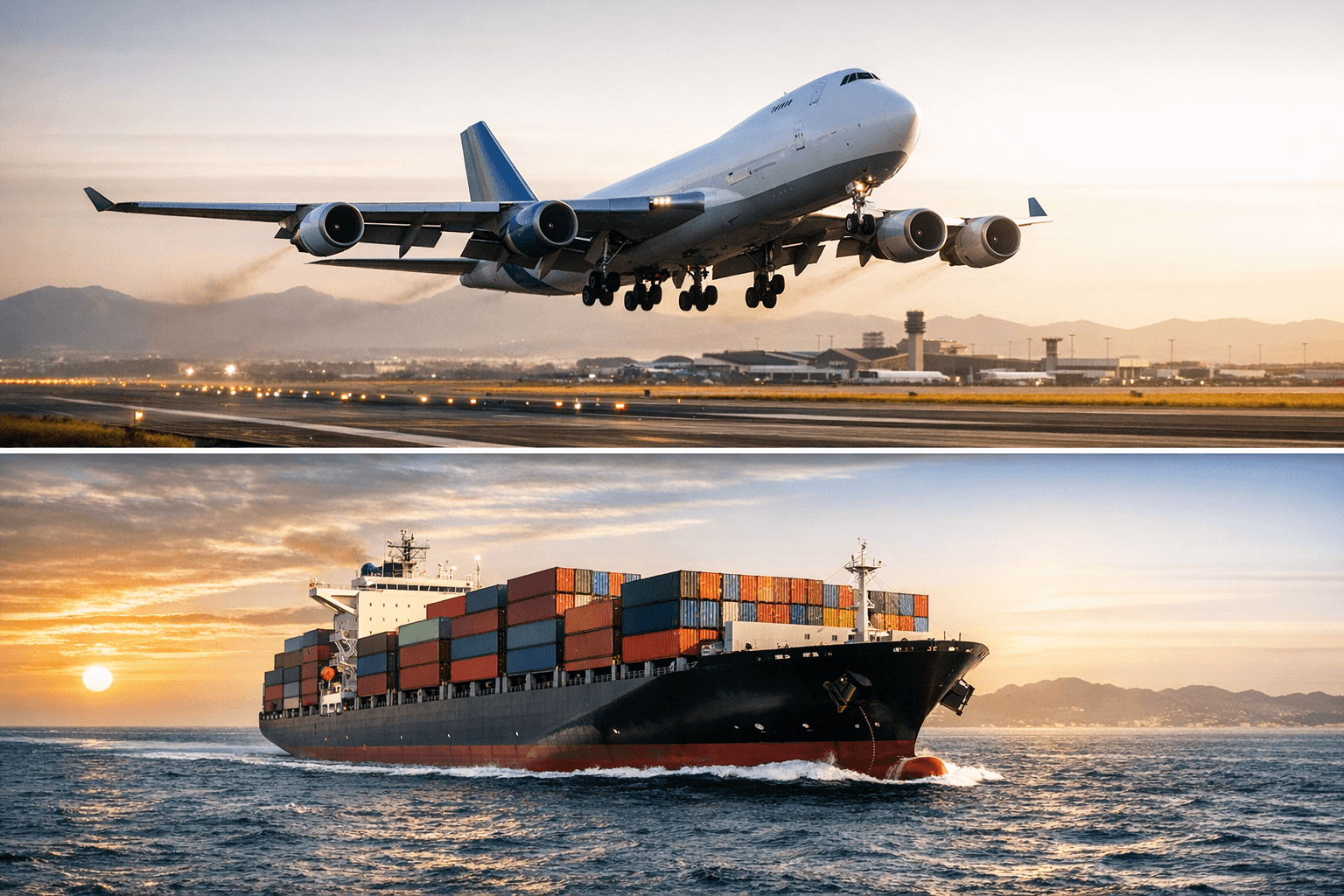
Choosing Between Air and Ocean Freight
One of the most important decisions in international shipping is choosing the right mode. Air freight offers speed; ocean freight offers cost savings. Understanding when to use each can significantly impact your bottom line.
Air Freight Overview
Advantages:
- Speed: Typical transit times of 1-5 days internationally
- Reliability: Less weather disruption, predictable schedules
- Security: Lower theft risk, better tracking
- Packaging: Less heavy-duty packaging required
- Inventory: Lower safety stock needs due to faster replenishment
Disadvantages:
- Cost: 4-6x more expensive than ocean per kg
- Capacity: Limited space, especially during peak seasons
- Size limits: Weight and dimension restrictions
- Carbon footprint: Higher emissions per kg
Ocean Freight Overview
Advantages:
- Cost: Dramatically cheaper for large volumes
- Capacity: Can ship virtually any size or quantity
- Versatility: Handles hazardous, oversized, and bulk cargo
- Environmental: Lower carbon footprint per unit
Disadvantages:
- Speed: 2-6 weeks depending on route
- Variability: Delays from weather, port congestion, vessel changes
- Packaging: Must withstand longer transit and handling
- Inventory: Higher safety stock requirements
Cost Comparison Example
Shipping 500 kg from Shanghai to Los Angeles:
- Air freight: $3.50-5.00/kg = $1,750-2,500
- Ocean freight (LCL): ~2 CBM = $300-500
Air costs roughly 5x more in this example, but delivers in days vs. weeks.
When to Choose Air
- High-value, low-weight products (electronics, jewelry, pharmaceuticals)
- Urgent or time-sensitive shipments
- Perishable goods with short shelf life
- New product launches requiring speed to market
- Emergency restocks to avoid stockouts
- Seasonal goods with narrow selling windows
When to Choose Ocean
- Heavy or bulky goods (furniture, machinery, raw materials)
- Large quantities with stable demand
- Non-perishable products with long shelf life
- Price-sensitive items with thin margins
- Regular replenishment with predictable schedules
The Hybrid Approach
Many businesses use a combination:
- Base stock via ocean: Regular, planned shipments for core inventory
- Air for spikes: Top-up fast-selling items or handle unexpected demand
- Sea-air services: Ocean to a hub, then air for final leg (balances cost and speed)
Decision Framework
Calculate the total landed cost including:
- Freight charges
- Insurance (higher value goods = higher premiums)
- Inventory carrying costs (longer transit = more working capital tied up)
- Risk of obsolescence or spoilage
- Opportunity cost of late market entry
The cheapest freight rate doesn't always mean the lowest total cost.
