The Critical Role of Bills of Lading
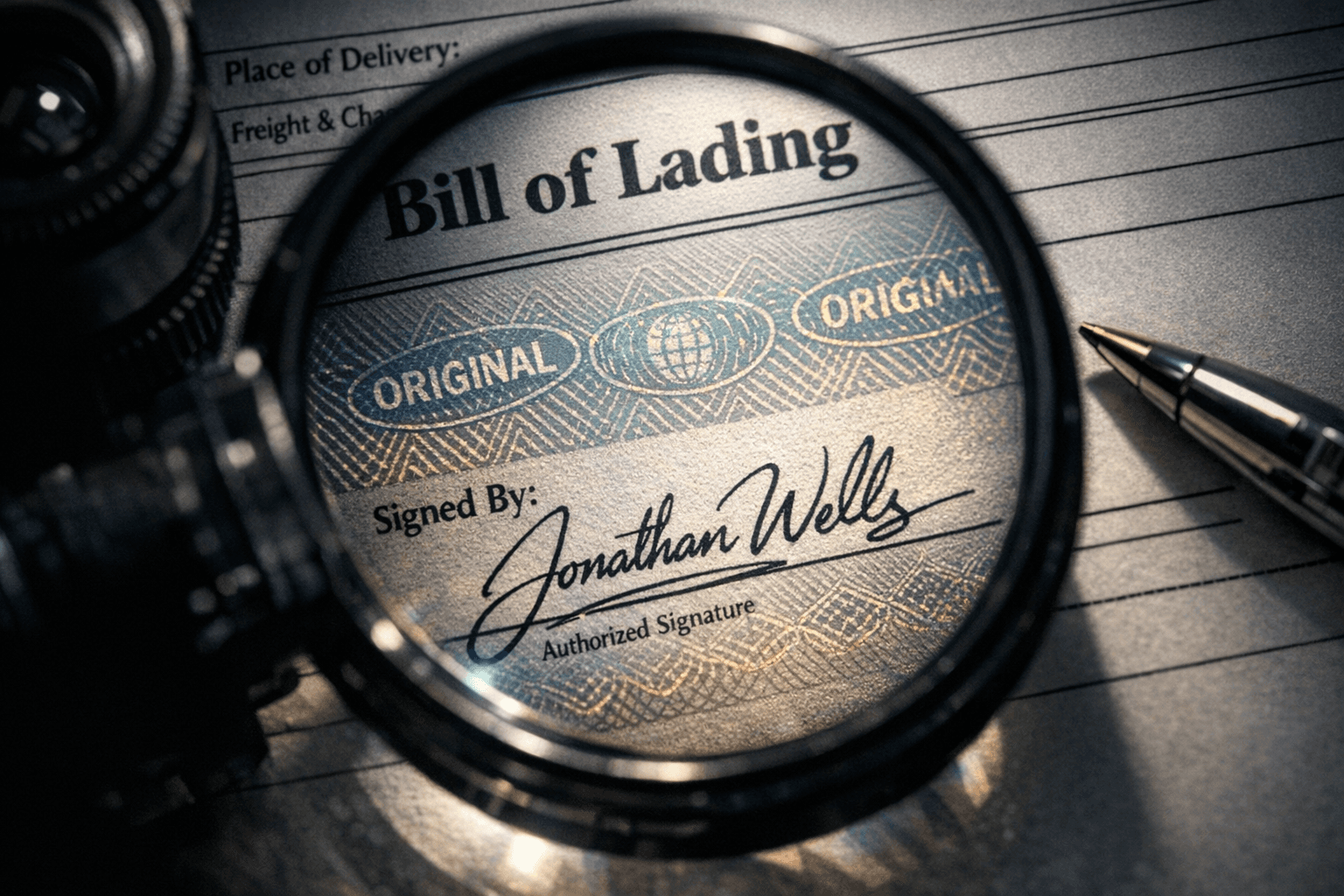
A bill of lading (BoL) serves three functions: contract of carriage, receipt for goods, and document of title. When fraudsters manipulate BoLs, they can effectively steal cargo worth millions. Understanding these schemes is essential for anyone moving cargo internationally.
Bill of Lading Fraud Types
Straight BoL Forgery
- Fraudster creates fake BoL to release cargo
- Impersonates legitimate consignee
- Collects cargo before real consignee arrives
- Sells stolen cargo on gray market
- Often involves corrupt port or terminal staff
Order BoL Manipulation
- Original BoL stolen or duplicated
- Endorsements forged to transfer title
- Cargo released to unauthorized party
- Legitimate holders left with worthless document
Telex Release Fraud
- Fake telex release authorizations
- Impersonates shipper with carrier
- Cargo released without original BoL
- Real shipper loses control of goods
Switch BoL Fraud
- Legitimate switch BoL process misused
- Replaces original shipper/consignee info
- Diverts cargo to fraudulent buyer
- Complicates trace-back investigation
Cloned BoL Scams
- Multiple "originals" created for same cargo
- Sold to different buyers
- Only one legitimate shipment exists
- Common in commodity fraud (oil, grain)
How Fraud Schemes Work
Typical Cargo Theft Scenario
- Criminal intercepts shipping documents or data
- Forges BoL with alternative consignee
- Presents fake BoL at terminal with bribed insider
- Takes cargo to offloading site
- Cargo sold through fence or shipped to co-conspirator
- Real consignee arrives days later to find cargo gone
Commodity Fraud Pattern
- Legitimate shipment of valuable commodity (oil, metals)
- Original BoL pledged as collateral to lender A
- Forged duplicate pledged to lender B
- Same cargo pledged to lender C
- Fraudster takes loan proceeds and disappears
- Lenders fight over single cargo
Red Flags on Bills of Lading
Document Appearance
- Inconsistent formatting or fonts
- Signature blocks don't match known samples
- Missing or incorrect BoL number format
- Security features absent (watermarks, holograms)
- Copy instead of original with no notation
- Unusual carrier stamp/seal
Content Anomalies
- Shipper/consignee addresses don't match contract
- Cargo description differs from commercial invoice
- Weights don't match packing list
- HS codes incorrect or missing
- Vessel/voyage not on published schedule
Process Red Flags
- Rush request for cargo release
- Unusual pickup arrangements
- Payment to new bank account
- Change in known consignee contact
- Email communications from new domain
Prevention Best Practices
For Shippers
- Use eBL platforms where possible (TradeLens, Bolero, essDOCS)
- Send original BoLs via secure courier with tracking
- Use letter of credit documentation control
- Require telex release authorization protocols
- Provide consignee advance notice of shipment
- Share BoL details securely with consignee
For Consignees
- Verify BoL directly with carrier before release
- Use carrier's eBL portal where available
- Confirm original BoL receipt promptly
- Establish release protocols with forwarder
- Monitor vessel arrivals and cargo status
- Use C-TPAT partners when possible
For Financiers
- Verify BoL authenticity with issuing carrier
- Use trade finance platforms (Marco Polo, we.trade)
- Implement blockchain BoL verification
- Cross-check commodity quantities against production data
- Require insurance certificates
- Monitor for duplicate financing attempts
Digital BoL Solutions
Benefits of eBL Adoption
- Cryptographic signatures prevent forgery
- Blockchain verification for authenticity
- Instant transfer eliminates paper risks
- Complete audit trail of transactions
- Single source of truth for all parties
Major eBL Platforms
- TradeLens (Maersk, IBM)
- Bolero International
- essDOCS
- edoxOnline
- Wave BL (Wave)
Verification Steps Before Cargo Release
- Verify BoL number with carrier's tracking system
- Confirm vessel/voyage on carrier website
- Check consignee identity via company registration
- Validate endorsement chain if order BoL
- Confirm telex release authorization directly with shipper
- Verify pickup party identity with photo ID and authorization
- Cross-check with commercial invoice and packing list
Cargo Insurance Considerations
Standard marine cargo insurance may exclude:
- Fraud by insured's own employees
- Misdelivery based on forged documents
- Delayed theft discovery
- Insurable interest disputes
Consider specialized coverage:
- Cargo fraud insurance
- Trade credit insurance
- Political risk insurance (state-sponsored fraud)
- Professional liability for freight forwarders
If You've Been Defrauded
- Document all evidence immediately (originals, emails, photos)
- Notify carrier and freight forwarder
- File police report in relevant jurisdictions
- Contact FBI for international cargo fraud
- Notify insurance carrier within policy timeframes
- Engage maritime attorney experienced in cargo fraud
- Consider vessel arrest if cargo still in transit
- Report to industry groups (NCB, TIA, FIATA)
Industry Collaboration
Effective fraud prevention requires coordination. Shippers, carriers, and authorities share intelligence through:
- IMB Piracy Reporting Centre
- TT Club cargo theft database
- BIMCO security reports
- National customs intelligence networks
Awareness and verification at every stage are your best defenses against increasingly sophisticated BoL fraud schemes.