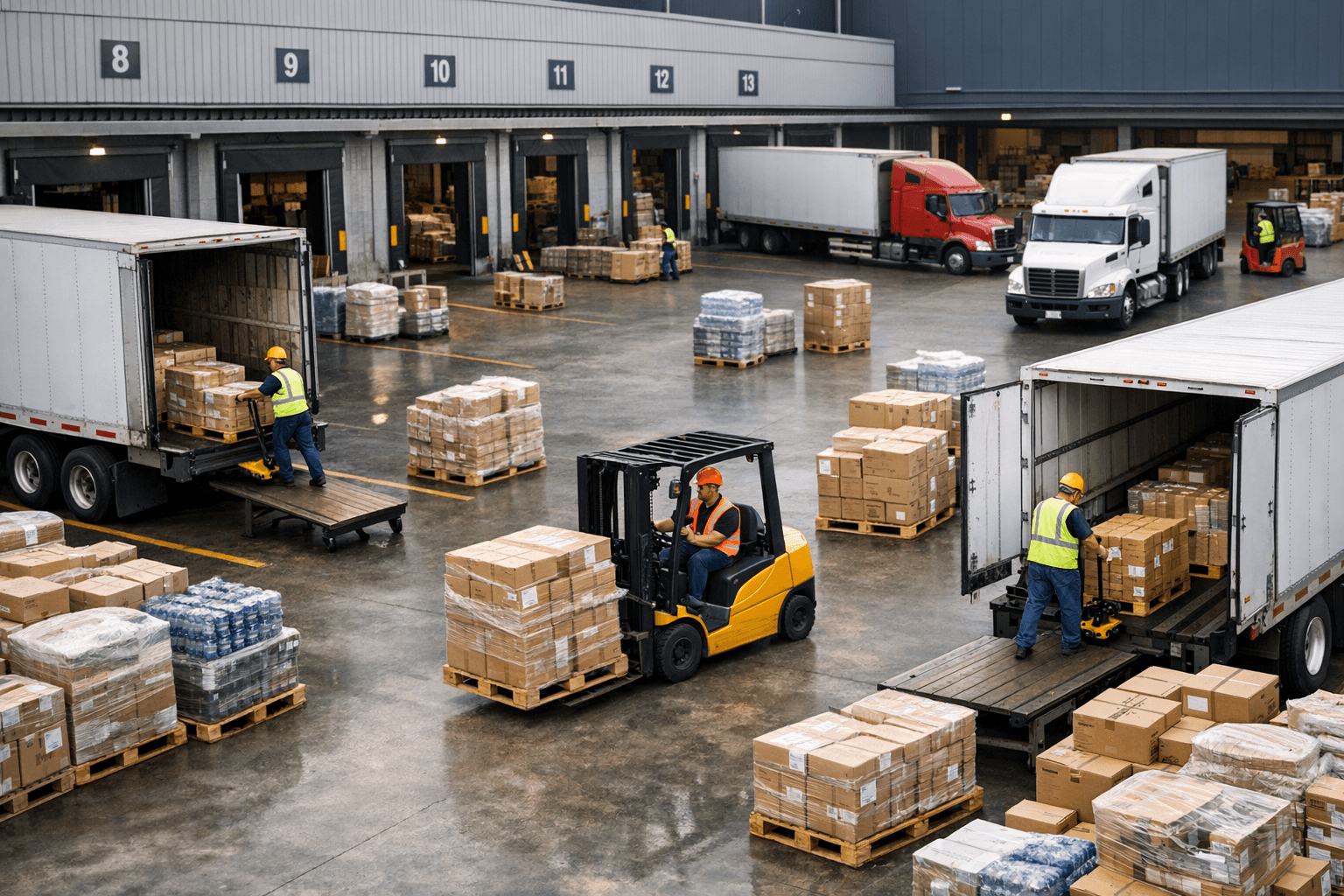
What Is Cross-Docking?
Cross-docking is a logistics practice where products are unloaded from inbound vehicles and loaded directly onto outbound vehicles with little or no storage time in between.
Types of Cross-Docking
Manufacturing Cross-Docking
- Receiving components from multiple suppliers
- Consolidating for delivery to production line
- Just-in-time inventory support
Distributor Cross-Docking
- Combining products from multiple vendors
- Creating mixed-SKU shipments for customers
- Retail distribution center model
Transportation Cross-Docking
- Consolidating LTL shipments into full truckloads
- Hub-and-spoke network efficiency
- Carrier terminal operations
Retail Cross-Docking
- Pre-allocated merchandise from vendors
- Store-ready shipments
- Minimal handling at distribution center
Benefits of Cross-Docking
- Reduced inventory: Less need for warehouse storage
- Lower handling costs: Products touched fewer times
- Faster delivery: Reduced dwell time
- Fresher products: Important for perishables
- Reduced storage costs: Smaller facilities needed
Requirements for Success
Facility Design
- Multiple dock doors for simultaneous loading/unloading
- Minimal storage space, maximum staging area
- Efficient layout for product flow
Technology
- Advanced WMS for real-time visibility
- Barcode/RFID scanning
- EDI communication with suppliers
- Transportation management system integration
Coordination
- Tight synchronization of inbound/outbound schedules
- Reliable supplier delivery performance
- Strong carrier partnerships
When Cross-Docking Works
- High-volume, fast-moving products
- Products already retail-ready
- Perishable goods needing quick turnover
- Promotional or seasonal merchandise
- Large retailers with sophisticated systems
When It Doesn't Work
- Products needing quality inspection
- Items requiring customization or labeling
- Unpredictable demand patterns
- Unreliable supplier delivery
- Low volume, high SKU count operations
Implementation Considerations
- Start with suitable product categories
- Invest in technology infrastructure
- Develop supplier compliance programs
- Train staff on new processes
- Build in contingency for exceptions
Measuring Success
- Dock-to-dock time
- Inventory turns
- Handling cost per unit
- Order accuracy
- On-time delivery performance