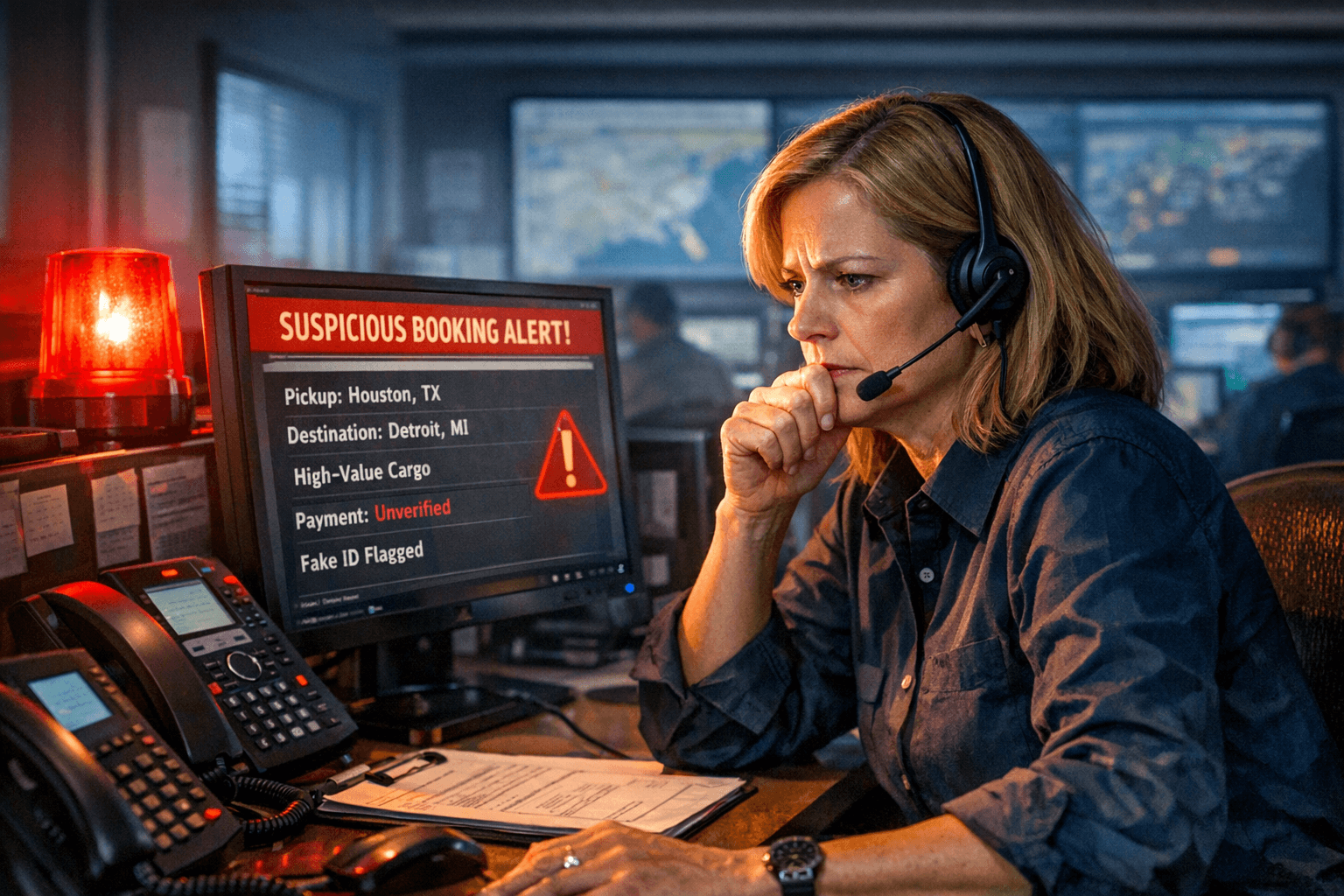
The Double-Brokering Crisis
Double-brokering fraud has exploded in US freight markets, costing shippers and legitimate carriers hundreds of millions annually. Understanding how these scams work is critical for anyone booking freight.
What Is Double-Brokering?
Double-brokering happens when a party accepts a load as a carrier but re-brokers it to an unrelated carrier without the shipper's permission. The scam variant takes this further:
- Fraudster poses as legitimate carrier using stolen credentials
- Accepts load and re-brokers to unsuspecting real carrier
- Collects payment from broker, disappears
- Real carrier never gets paid
- Shipper/broker holds liability
Common Scam Patterns
Identity Theft Scams
- Fraudster steals MC number and company info of legit carrier
- Creates fake email domains (gmail/outlook variations)
- Uses spoofed phone numbers
- Responds to load boards with stolen identity
Phantom Carrier Scams
- Creates shell carrier with minimal DOT activity
- Operates briefly to build basic history
- Accepts high-value loads then disappears
- Can involve cargo theft, not just payment fraud
Rate Confirmation Forgery
- Fake rate confirmations sent to unsuspecting carriers
- Uses real broker letterhead and MC numbers
- Directs payment to fraudster's factoring company
- Diverts funds from legitimate carrier
Red Flags to Watch
Email and Communication
- Free email domains (gmail, yahoo, outlook) for carrier business
- Subtle variations in domain names (karrier.com vs carrier.com)
- New contact person at "known" carrier
- Phone numbers don't match FMCSA records
- Poor grammar or inconsistent details
Rate and Booking Behavior
- Willing to take rate 15-25% below market
- Eager for loads with no questions on route
- Unusual payment terms requested
- Quick acceptance without negotiation
- Requests rate increase after pickup
Document Red Flags
- Recently issued MC number on high-value loads
- Insurance certificates from unknown providers
- Driver doesn't match stated company
- Truck number doesn't match company fleet
- Missing or forged W-9 forms
Verification Steps Before Booking
- Verify MC number in FMCSA SAFER - check operating status, safety rating, insurance
- Confirm email domain - should match company website
- Call main company number - verify contact person works there
- Check Carrier411 or similar - fraud history and reviews
- Request copy of W-9 - match to FMCSA records
- Verify insurance directly - call insurer to confirm coverage
- Review factoring relationships - factors should match company records
Technology Defenses
Digital Carrier Onboarding
- Platforms like Carrier Assure, MyCarrierPortal
- Real-time FMCSA verification
- Document authentication
- Continuous monitoring
Load Board Protections
- DAT CarrierWatch verification
- Truckstop.com's RMIS compliance
- Carrier performance scores
- Fraud alert networks
If You've Been Scammed
- File report with FBI IC3 (Internet Crime Complaint Center)
- Report to Transportation Intermediaries Association (TIA)
- Alert FMCSA about identity theft
- Notify your insurance carrier
- Contact freight industry fraud sharing networks
- Document everything for legal action
Legitimate Broker Best Practices
- Require signed broker-carrier agreement
- Include anti-double-brokering clauses
- Audit high-risk loads before tender
- Monitor load tracking in real-time
- Verify delivery driver identity
- Hold payment until delivery verified
Shipper Protections
As a shipper, you have leverage to demand protection:
- Require broker carrier verification documentation
- Include indemnification clauses
- Monitor shipment tracking via GPS
- Audit high-value lanes regularly
- Consider freight fraud insurance
Industry Response
FMCSA has increased enforcement actions against double-brokers. Recent reforms include stricter MC number issuance, mandatory insurance verification, and shared fraud databases. Industry groups push for federal legislation with criminal penalties.