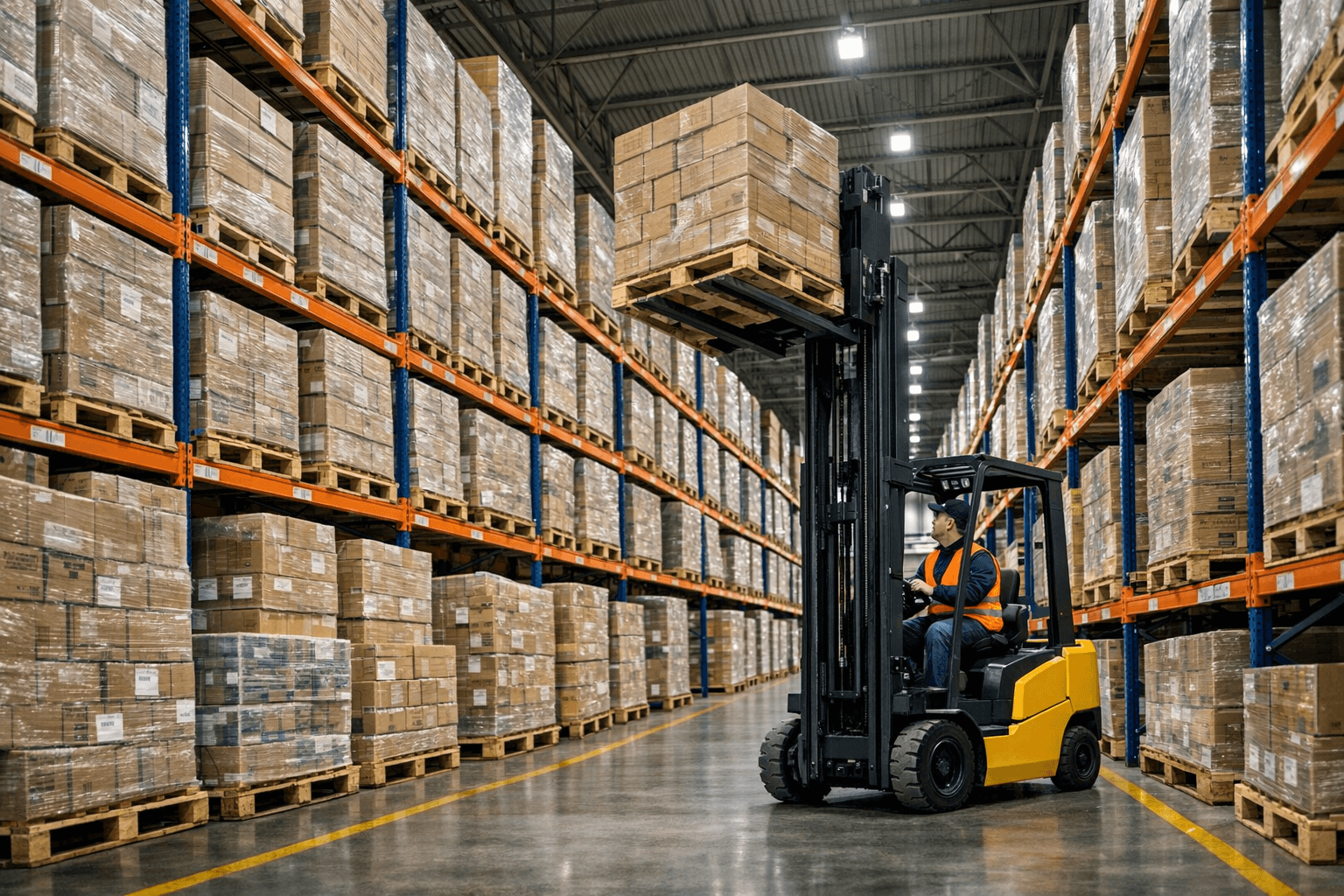
Pallet Shipping Fundamentals
Pallets are the building blocks of freight shipping. Proper palletization protects your goods, maximizes container utilization, and reduces handling damage. Here's everything you need to know.
Standard Pallet Sizes
North America (GMA/ISPM 15):
- 48" x 40" (1219 x 1016 mm) - Most common in USA
- 42" x 42" - Paint and coatings industry
- 48" x 48" - Drums and barrels
Europe (EUR/EPAL):
- EUR 1: 1200 x 800 mm (most common)
- EUR 2: 1200 x 1000 mm
- EUR 3: 1000 x 1200 mm
Asia-Pacific:
- 1100 x 1100 mm - Common in Australia, Japan
- 1200 x 1000 mm - Widely used across Asia
Container Fit Calculator
How many pallets fit in a container?
20-foot container (internal 5.9m x 2.35m):
- Standard US pallets (48x40"): 10 floor positions
- Euro pallets (1200x800mm): 11 floor positions
40-foot container (internal 12m x 2.35m):
- Standard US pallets: 20-21 floor positions
- Euro pallets: 23-24 floor positions
Weight Considerations
Pallet Weight Limits:
- Standard wooden pallet: 1,000-1,500 kg dynamic / 2,500-3,000 kg static
- Plastic pallets: Varies widely, check specifications
- Container weight limit: Usually 28,000 kg max payload
Important: A container can hold more weight than you can fit in pallets, or vice versa. Calculate both weight and volume to optimize.
Stacking Guidelines
Safe Stacking Practices:
- Never stack beyond the pallet's rated capacity
- Keep pallet loads level and stable
- Heaviest items on bottom, lighter on top
- Use corner boards to reinforce tall loads
- Stretch wrap thoroughly to prevent shifting
Stackability:
- Non-stackable: Mark clearly with symbols, single tier only
- Double-stack: Standard for sturdy goods
- Triple-stack: Only for lightweight, sturdy products
Pallet Materials
Wood (Most Common):
- Pros: Cheap, repairable, recyclable, good grip
- Cons: Varies in quality, pest treatment required (ISPM 15)
Plastic:
- Pros: Consistent, hygienic, no pest treatment, reusable
- Cons: Higher cost, slippery surface, not repairable
Corrugated:
- Pros: Lightweight, cheap, no treatment needed
- Cons: Low weight capacity, not moisture resistant
ISPM 15 Requirements
International shipments using wood pallets require ISPM 15 compliance:
- Wood must be heat treated or fumigated
- Must display official stamp with country code and certification
- Non-compliant pallets can be refused or destroyed at customs
Common Mistakes to Avoid
- Overhang beyond pallet edges (causes damage)
- Inconsistent box sizes creating unstable loads
- Insufficient stretch wrap or strapping
- Using damaged pallets
- Not accounting for pallet dimensions in container planning
Proper palletization saves money, reduces damage claims, and keeps goods moving efficiently through the supply chain.
