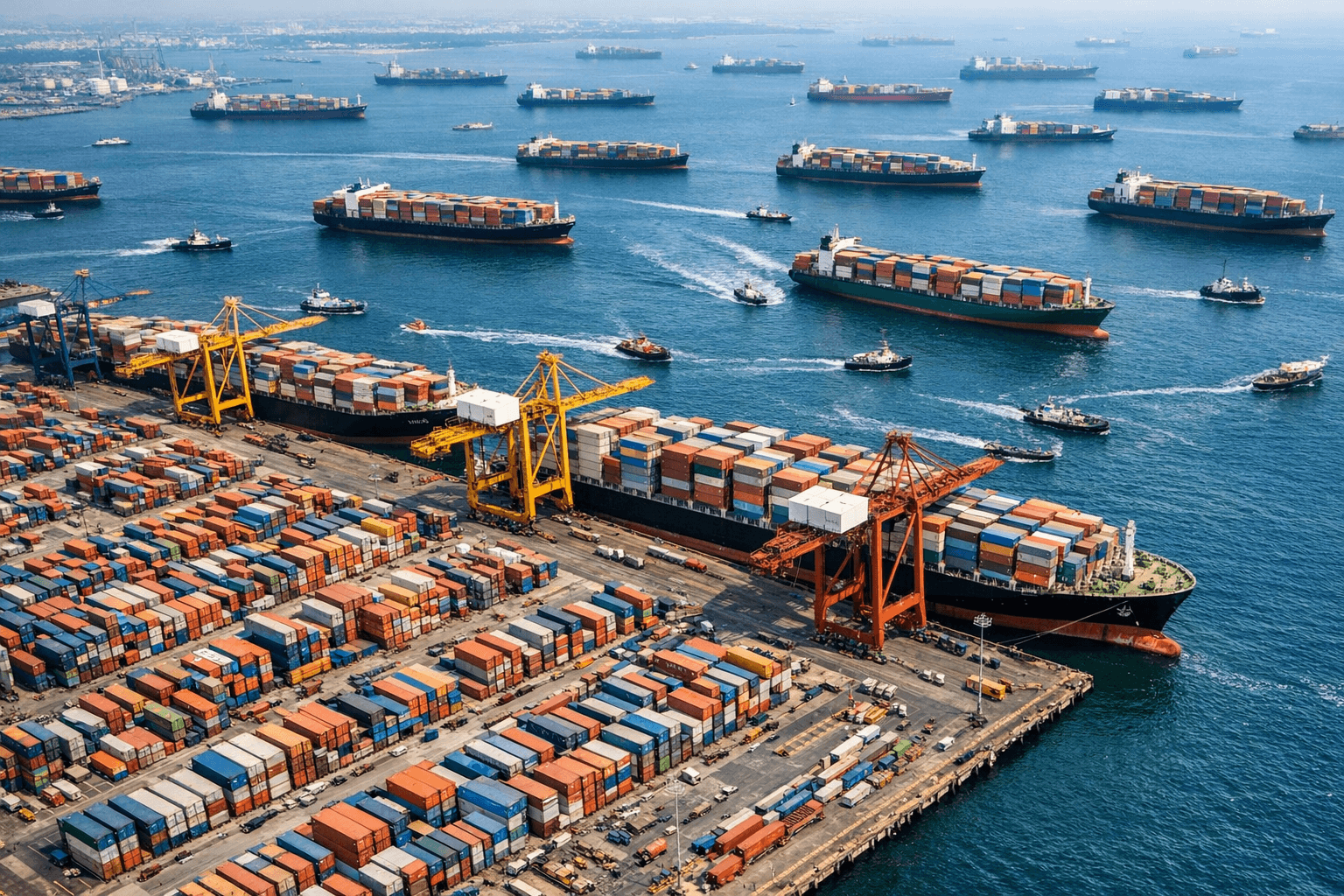
Understanding Port Congestion
Port congestion occurs when the volume of cargo exceeds a port's capacity to efficiently process it. This creates delays, increases costs, and ripples through entire supply chains. While conditions have improved from pandemic peaks, congestion remains an ongoing challenge in 2026.
What Causes Port Congestion?
Demand-Side Factors:
- Volume surges: Peak seasons, promotional events, economic cycles
- Vessel bunching: Multiple ships arriving simultaneously after delays
- Inventory restocking: Companies building buffer stock
- Trade lane shifts: Rerouting due to geopolitical events
Supply-Side Factors:
- Labor constraints: Shortages, contract negotiations, work actions
- Equipment availability: Chassis, containers, handling equipment
- Infrastructure limits: Berths, cranes, storage capacity
- Rail and trucking: Inland transportation bottlenecks
External Disruptions:
- Weather events: Hurricanes, fog, extreme conditions
- Vessel incidents: Groundings, mechanical failures
- Geopolitical events: Route changes, sanctions, conflicts
- IT systems: Cyber incidents, system outages
Impacts of Congestion
On Shippers:
- Delayed cargo availability
- Increased demurrage and detention charges
- Inventory stockouts
- Higher freight rates during peaks
- Unpredictable lead times
On the Supply Chain:
- Vessel schedule unreliability
- Container imbalances
- Cascading delays at subsequent ports
- Warehouse capacity strain
Current Hot Spots (2026)
Congestion levels vary by port and change frequently. Key areas to monitor:
- US West Coast: Los Angeles/Long Beach - improved but still sensitive to volume spikes
- US East Coast: Savannah, New York/New Jersey - handling increased volumes
- Europe: Rotterdam, Hamburg, Antwerp - affected by Red Sea rerouting
- Asia: Generally more efficient, but capacity constraints exist
Strategies to Mitigate Congestion Impact
Planning and Visibility:
- Monitor port conditions and vessel schedules proactively
- Build buffer time into your supply chain planning
- Use tracking tools to see where your cargo is
- Maintain communication with your freight forwarder
Diversification:
- Use multiple ports of entry when possible
- Consider rail vs. truck for inland moves
- Develop relationships with multiple carriers
- Explore alternative trade lanes
Operational Agility:
- Pre-clear cargo before vessel arrival
- Ensure documentation is accurate and complete
- Arrange trucking or rail before cargo arrives
- Have contingency plans for delays
Timing Strategies:
- Avoid peak season rushes when possible
- Ship earlier to build inventory buffer
- Consider off-peak port gates (nights, weekends)
- Coordinate with warehouse receiving schedules
Working with Congested Ports
Before Arrival:
- Confirm vessel ETA regularly (schedules slip)
- Complete customs clearance early
- Book drayage in advance
- Verify terminal appointment availability
During Congestion:
- Stay in close contact with your broker and forwarder
- Be flexible on pickup times
- Consider direct delivery vs. warehouse if faster
- Document delays for potential fee disputes
Long-Term Solutions
The industry is working on systemic improvements:
- Port automation and modernization
- Extended gate hours and appointment systems
- Inland port development
- Data sharing and visibility platforms
- Infrastructure investment
Congestion won't disappear, but proactive planning can minimize its impact on your supply chain.
