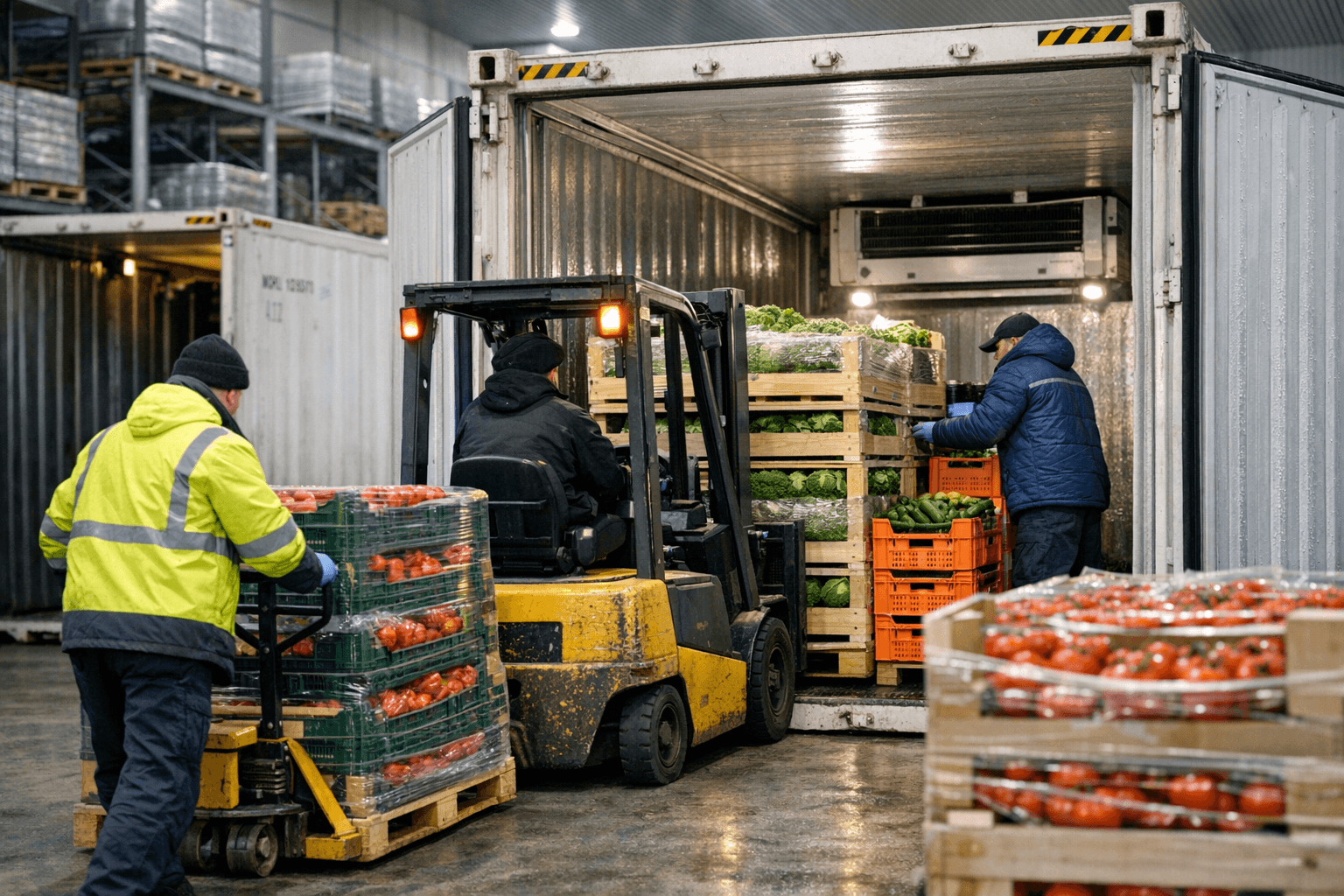
Understanding Refrigerated Shipping
Reefer (refrigerated) containers enable global trade in perishables—fresh produce, frozen goods, pharmaceuticals, and other temperature-sensitive products. Maintaining the cold chain is critical to preserving quality and safety.
How Reefer Containers Work
Integrated Refrigeration Unit
- Self-contained cooling system on container end
- Compressor, condenser, evaporator
- Powered by vessel, terminal, or genset
- Digital controller for precise temperature management
Temperature Range
- Typical range: -35°C to +30°C (-31°F to +86°F)
- Frozen cargo: -18°C to -25°C (0°F to -13°F)
- Chilled cargo: 0°C to +8°C (32°F to 46°F)
- Some units offer ultra-low temperatures for specialized cargo
Airflow Design
- T-floor (ribbed floor) allows air circulation
- Air flows from bottom, up through cargo, returns at top
- Cargo must not block airflow
Reefer Container Sizes
- 20-foot reefer: ~28 CBM internal capacity
- 40-foot reefer: ~59 CBM internal capacity
- 40-foot high cube reefer: ~67 CBM internal capacity
Note: Usable space is less than dry containers due to refrigeration equipment and airflow requirements.
Product Categories
Frozen Goods
- Meat and poultry
- Seafood
- Frozen fruits and vegetables
- Ice cream
Chilled Goods
- Fresh produce
- Dairy products
- Fresh meat
- Cut flowers
Controlled Atmosphere
- Modified O2/CO2 levels for produce
- Extends shelf life of fruits and vegetables
- Specialized equipment required
Pharmaceuticals
- Vaccines and biologics
- Temperature-sensitive medications
- Strict compliance requirements
Cold Chain Management
Pre-Cooling
- Product must be at correct temperature before loading
- Reefers maintain temperature, they don't cool down warm cargo quickly
- Pre-cool the container if needed
Loading Best Practices
- Load quickly to minimize temperature exposure
- Don't block airflow—leave space at floor and ceiling
- Use proper stacking patterns
- Secure cargo to prevent shifting
Monitoring
- Data loggers record temperature throughout journey
- Remote monitoring available on some units
- Check temperature records at destination
Common Problems
Temperature Excursions
Causes:
- Pre-trip inspection failure
- Power interruption
- Improper loading blocking airflow
- Door opened during transit
- Equipment malfunction
Prevention:
- Request pre-trip inspection (PTI)
- Verify container condition before loading
- Train loading crews on proper procedures
- Use temperature monitors with alerts
Costs and Considerations
Premium Costs
- Reefer containers cost 2-3x dry containers
- Fuel surcharges for power
- Pre-trip inspection fees
- Monitoring service fees
Capacity Constraints
- Limited reefer slots on vessels
- Peak season for produce can be tight
- Book early for high-demand periods
Documentation Requirements
- Temperature requirements on booking
- Phytosanitary certificates (produce)
- Health certificates (meat, dairy)
- Temperature records for compliance
Choosing a Carrier
Evaluate:
- Reefer equipment age and condition
- Transit time (shorter is better for perishables)
- Monitoring and communication capabilities
- Track record with similar cargo
- Claims handling process
Cold chain shipping requires precision at every step. One break in the chain can spoil an entire shipment. Plan carefully and partner with experienced providers.
