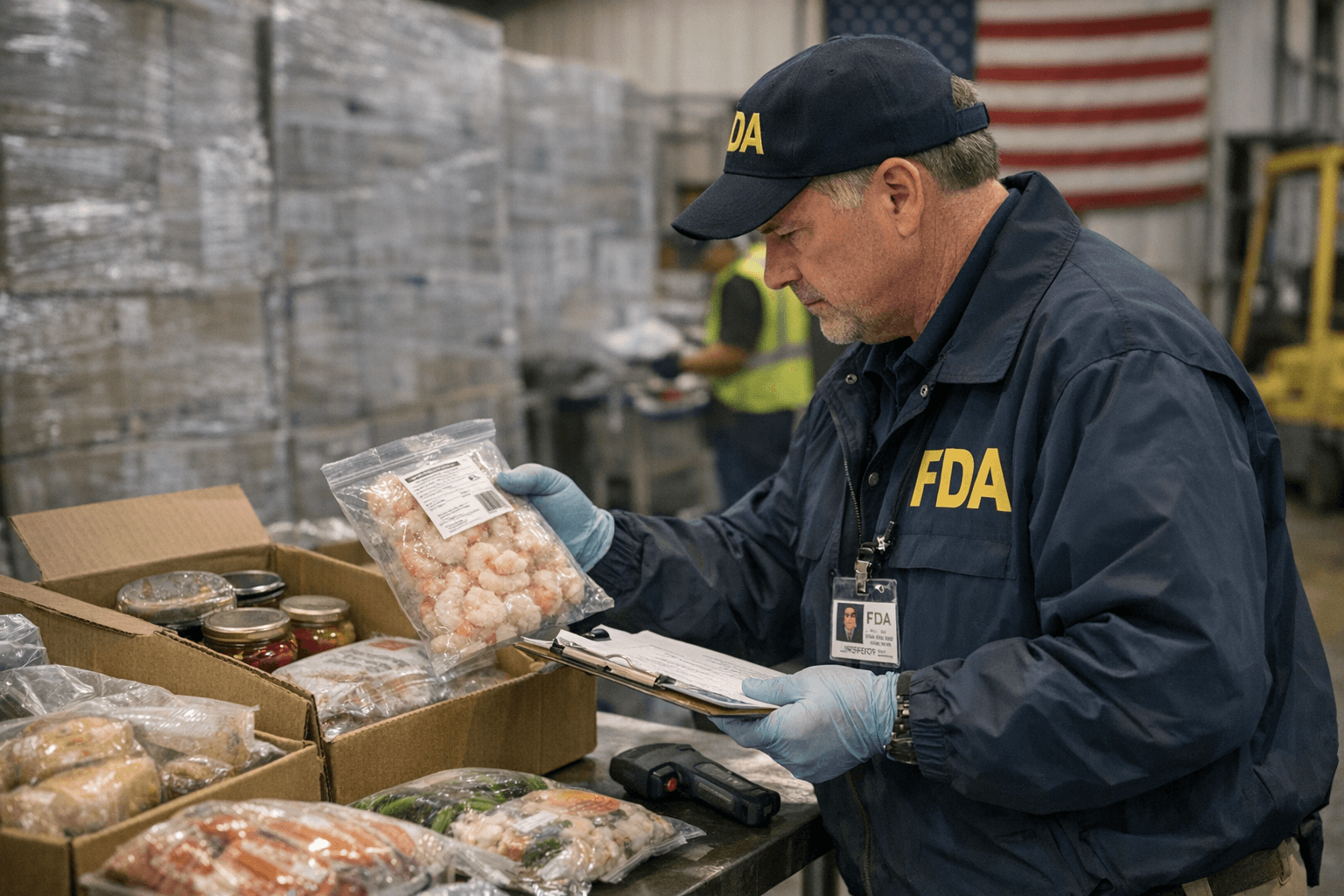
FDA Requirements for Food Importers
Food imported into the United States must comply with FDA regulations designed to ensure safety. Understanding these requirements is essential to avoid detention, refusal, and costly delays.
Key Regulatory Requirements
Prior Notice
All food shipments require prior notice to FDA before arrival:
- Submit via ABI/ACS or FDA's Prior Notice System Interface
- Required information: product, manufacturer, shipper, carrier, etc.
- Timing: varies by mode (2-8 hours before arrival)
- Confirmation number must be provided to CBP
Facility Registration
Foreign facilities that manufacture, process, pack, or hold food must:
- Register with FDA (biennial renewal in even years)
- Designate a US Agent for communication
- Keep registration current—suspended facilities cannot export to US
Foreign Supplier Verification Programs (FSVP)
Importers must verify foreign suppliers meet US safety standards:
- Conduct hazard analysis
- Evaluate supplier performance
- Conduct verification activities (audits, testing, etc.)
- Take corrective actions when needed
- Maintain records for FDA inspection
Labeling Requirements
General Requirements:
- English language required
- Statement of identity (common name)
- Net quantity
- Ingredient list (descending order by weight)
- Nutrition Facts panel
- Allergen declaration
- Name and address of manufacturer, packer, or distributor
- Country of origin
Special Labeling:
- Organic claims must meet USDA standards
- Health claims require FDA authorization
- GMO disclosure requirements (Bioengineered Food)
Product-Specific Requirements
Seafood:
- HACCP plan required from processor
- Species must be on FDA's approved list
- Special requirements for molluscan shellfish
Dairy:
- Must come from approved countries with equivalent safety systems
- Pasteurization requirements
- Cheese aging requirements for raw milk products
Meat and Poultry:
- Primarily regulated by USDA FSIS, not FDA
- Must come from approved countries with inspection equivalence
- Requires import permit
Produce:
- FSMA Produce Safety Rule compliance
- Farm audit requirements for certain commodities
Import Alerts and Detention
What Triggers Detention:
- Previous violations from same shipper/country
- Import alert listings
- Random examination
- Suspicious appearance or documentation
Types of Import Alerts:
- Countrywide: All shipments from a country
- Regional: Specific geographic areas
- Shipper-specific: Named firms or manufacturers
- Product-specific: Certain commodities
Detention Without Physical Examination (DWPE):
Products may be automatically detained if on import alert list. Release requires proof of compliance.
Compliance Strategies
Supplier Selection:
- Vet suppliers thoroughly before importing
- Request audit reports and certifications
- Verify facility registration status
- Check import alert lists
Documentation:
- Maintain complete supplier records
- Keep FSVP documentation current
- Have product specifications and certificates available
Testing:
- Consider pre-shipment testing for high-risk products
- Establish testing protocols for incoming shipments
- Work with FDA-recognized labs
Working with FDA
- Respond promptly to requests for information
- Consider voluntary recall if safety issues arise
- Attend FDA importer trainings
- Stay current on guidance documents and updates
Food import compliance is complex but manageable with proper systems in place. Invest in compliance infrastructure to avoid costly border delays and rejections.
