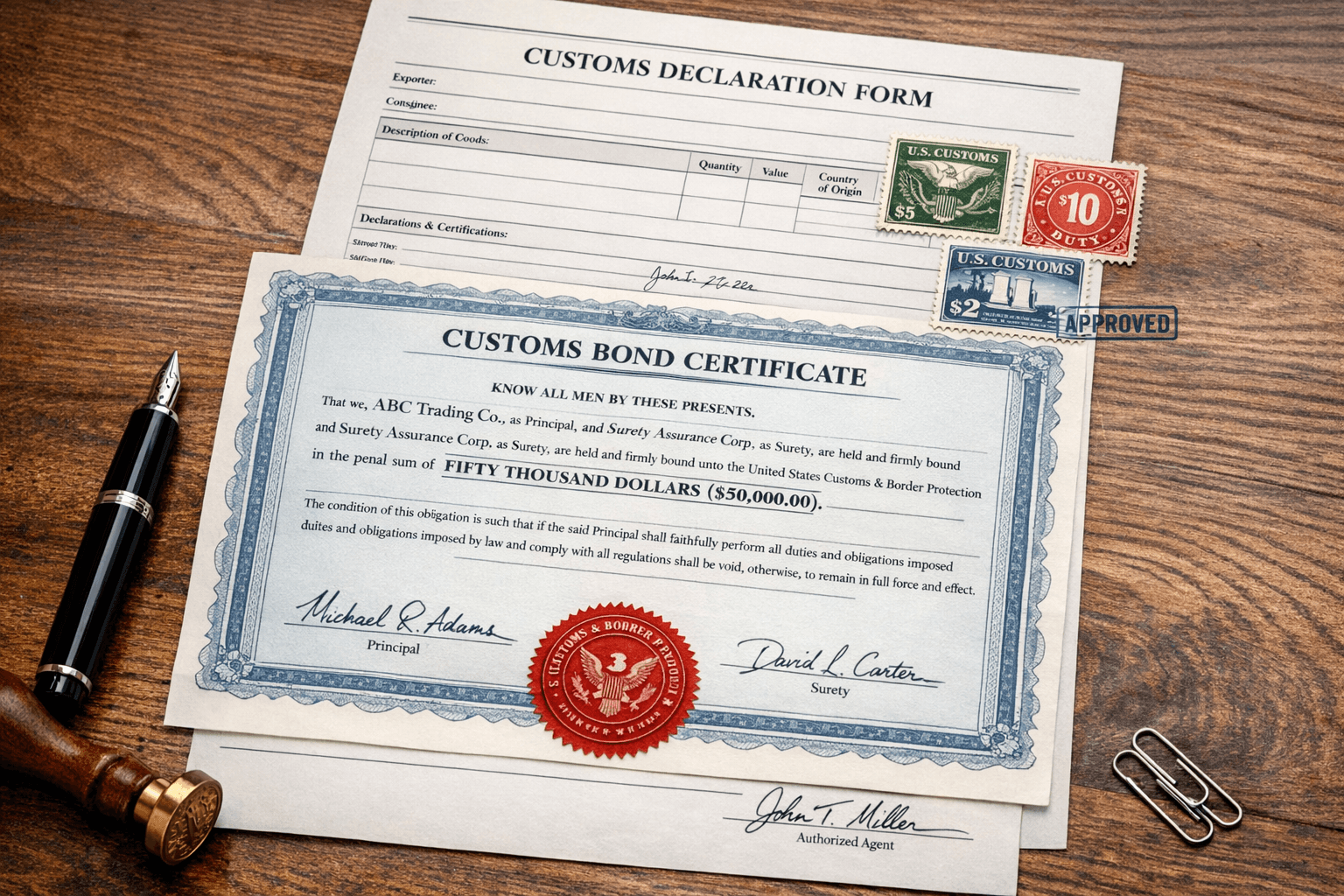
Understanding Customs Bonds
A customs bond is a financial guarantee that ensures duties, taxes, and fees will be paid and import regulations followed. Most commercial importers need one.
What Is a Customs Bond?
A three-party agreement:
- Principal: The importer who must fulfill obligations
- Surety: Insurance company backing the bond
- Beneficiary: CBP (US Customs and Border Protection)
When Is a Bond Required?
- Commercial shipments valued over $2,500
- Goods subject to other agency requirements (FDA, etc.)
- Quota merchandise
- Temporary imports
Types of Customs Bonds
Single Entry Bond (STB)
- Covers one specific shipment
- Valid for that entry only
- Good for occasional importers
- Cost: typically 0.5-1% of shipment value + duties
- Minimum coverage amount applies
Continuous Bond (CB)
- Covers all entries for one year
- Renewed annually
- Required amount: greater of $50,000 or 10% of prior year's duties
- Cost: typically $500-2,000+ per year
- More economical for regular importers
Bond Amount Calculation
Continuous Bond:
- 10% of duties, taxes, and fees paid in prior year
- Minimum $50,000
- CBP may require higher amounts based on risk
Single Entry:
- Total entered value + duties + taxes + fees
- Minimum typically $100
How to Obtain a Bond
- Contact a surety company or customs broker
- Complete application with business information
- Provide financial documentation if required
- Pay premium
- Bond filed with CBP
Bond Sufficiency
CBP monitors bond adequacy:
- Periodic reviews of duty levels vs bond amount
- May require bond increase if importing more
- Insufficient bond can cause shipment delays
Bond Claims
CBP can make claims against your bond for:
- Unpaid duties or fees
- Liquidated damages for violations
- Penalties for non-compliance
Impact of Claims:
- Surety pays CBP
- Surety seeks reimbursement from you
- May affect future bond availability or cost
- Multiple claims can make bonding difficult
Activity Codes
Bonds cover specific activities:
- Code 1: Importer/broker (most common)
- Code 2: Drawback
- Code 3: Custodian of bonded merchandise
- Other codes for specialized activities
Best Practices
- Get continuous bond if importing more than a few times per year
- Review bond sufficiency annually
- Maintain good compliance to protect bond standing
- Work with reputable surety companies