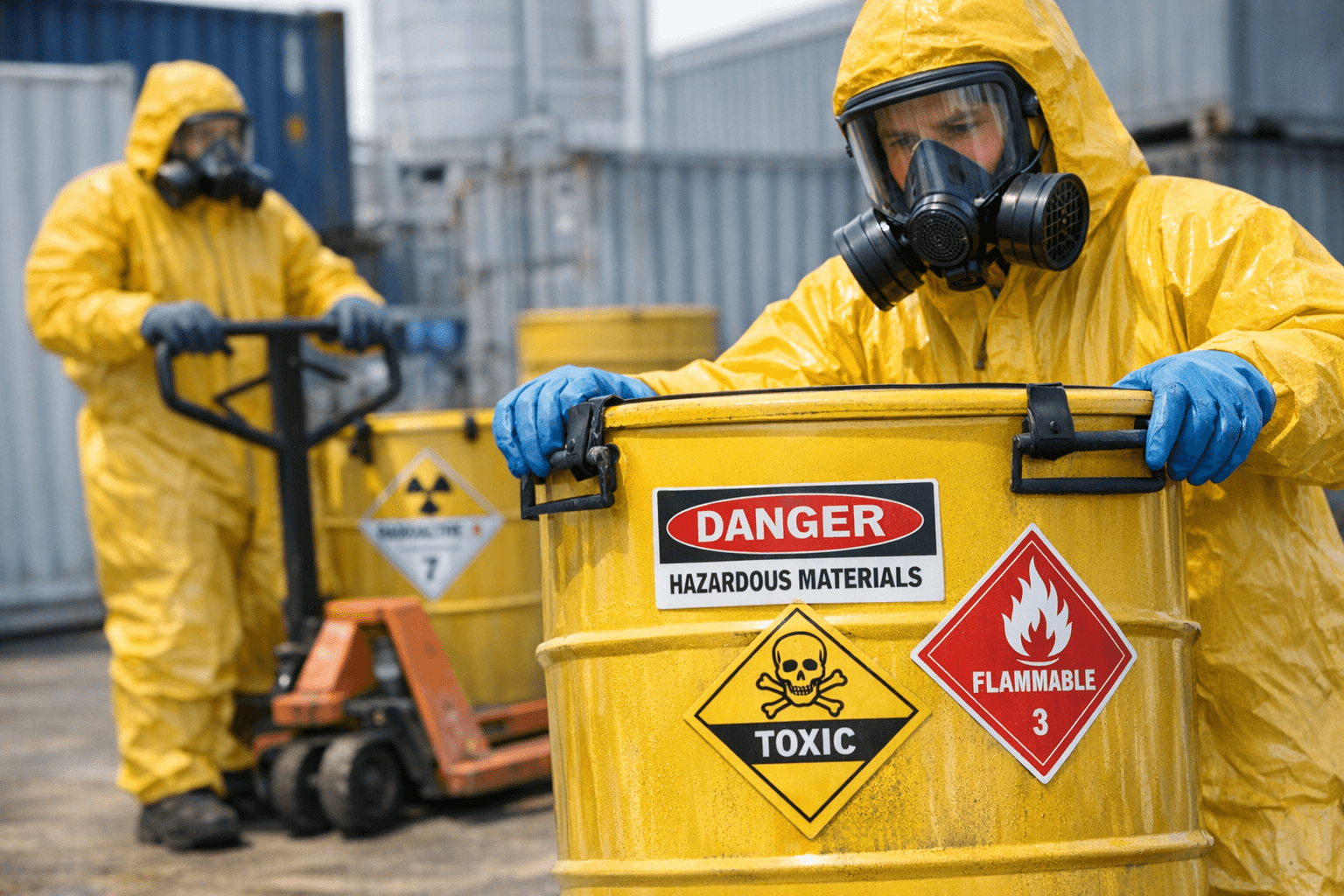
Shipping Dangerous Goods Safely
Dangerous goods (DG) or hazardous materials (hazmat) require special classification, packaging, documentation, and handling. Errors can result in accidents, fines, shipment rejection, or criminal liability.
Regulatory Framework
Key Regulations:
- IMDG Code: International Maritime Dangerous Goods (ocean)
- IATA DGR: International Air Transport Association Dangerous Goods Regulations (air)
- 49 CFR: US Department of Transportation regulations (domestic)
- ADR: European road transport regulations
The 9 Hazard Classes
- Class 1: Explosives
- Class 2: Gases (flammable, non-flammable, toxic)
- Class 3: Flammable liquids
- Class 4: Flammable solids, spontaneously combustible, dangerous when wet
- Class 5: Oxidizers and organic peroxides
- Class 6: Toxic and infectious substances
- Class 7: Radioactive materials
- Class 8: Corrosives
- Class 9: Miscellaneous dangerous goods
Classification Process
- Identify the hazard: What makes this product dangerous?
- Find the proper shipping name: Official name from the dangerous goods list
- Determine UN number: Four-digit identifier
- Identify packing group: I (high), II (medium), III (low danger)
- Note subsidiary hazards: Additional risks beyond primary class
Packaging Requirements
UN-Certified Packaging
- Must use packaging tested and certified to UN standards
- Packaging must match the product's packing group
- Look for the UN marking symbol
- Use inner packaging and absorbent materials as required
Labeling and Marking
- Hazard class labels (diamond-shaped)
- UN number displayed
- Proper shipping name
- Shipper and consignee information
- Handling labels (this way up, etc.)
Documentation Requirements
Dangerous Goods Declaration
Must include:
- Proper shipping name and UN number
- Class and subsidiary class
- Packing group
- Number and type of packages
- Net quantity
- Shipper's declaration and signature
Air Freight Specific:
- Shipper's Declaration for Dangerous Goods (IATA format)
- Must be completed by trained personnel
- Strict format requirements
Training Requirements
Personnel involved in DG shipping must be trained:
- General awareness training
- Function-specific training
- Safety training
- Recurrent training (every 2-3 years)
Common Restricted Items
Air Freight Restrictions:
- Many items forbidden on passenger aircraft
- Some items only allowed on cargo aircraft
- Quantity limits per package
- Lithium battery restrictions
Ocean Freight Considerations:
- Stowage requirements (on deck, below deck)
- Segregation from incompatible goods
- Container packing certificate
Lithium Batteries
Special attention required for lithium batteries:
- Lithium ion (UN3481): Rechargeable, in devices or packed with equipment
- Lithium metal (UN3091): Non-rechargeable
- Watt-hour and lithium content limits
- State of charge requirements
- Section II exceptions for small quantities
Carrier Approvals
- Not all carriers accept dangerous goods
- Pre-approval often required
- Surcharges apply
- Some routes may be restricted
Consequences of Non-Compliance
- Shipment rejection and delays
- Fines up to $75,000+ per violation
- Criminal penalties for willful violations
- Liability for accidents and injuries
- Carrier blacklisting
When in doubt, consult with a dangerous goods specialist. The complexity and stakes are too high for guesswork.
