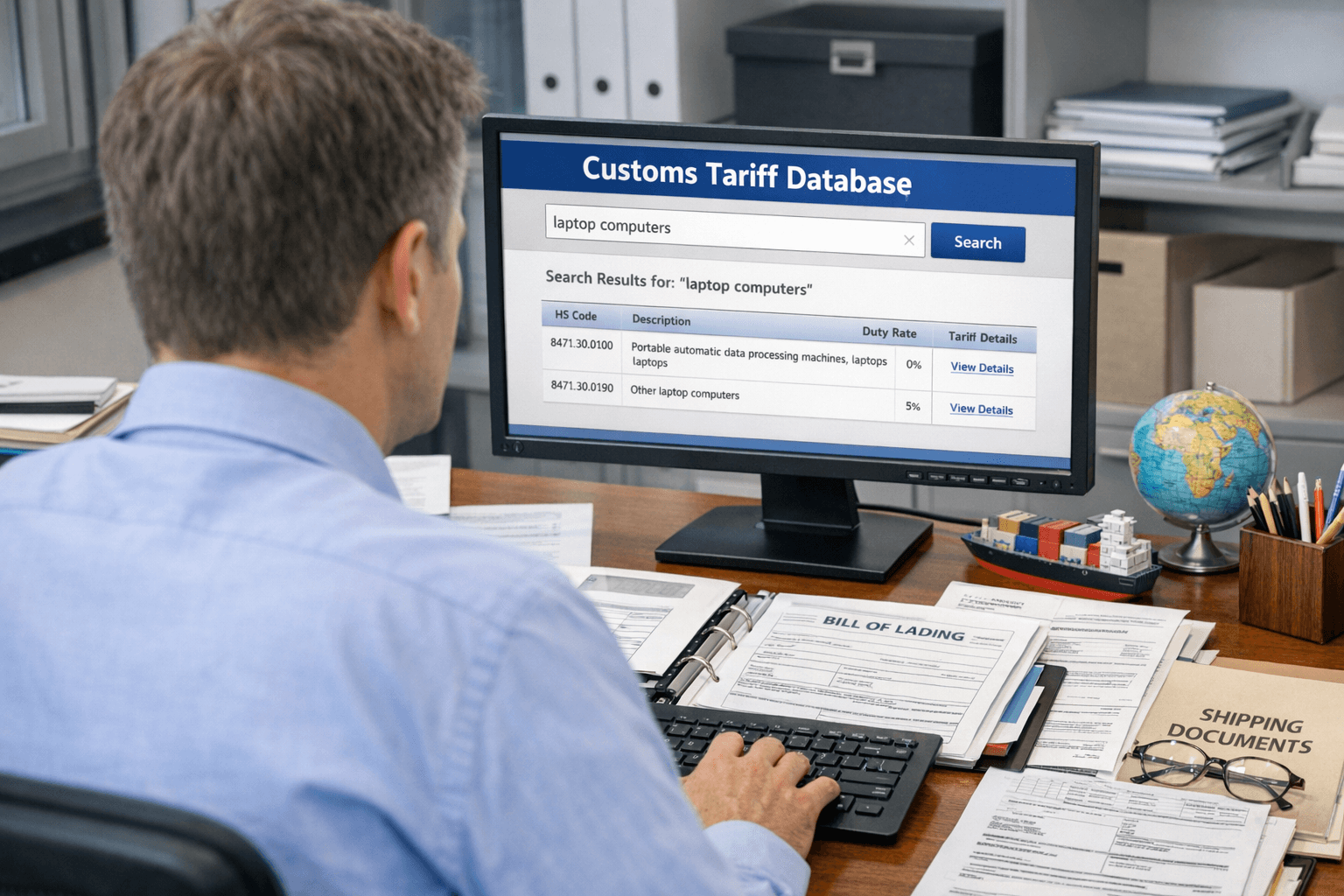
What Are HTS Codes and Why Do They Matter?
The Harmonized Tariff Schedule (HTS) is a standardized system of numbers used to classify every product imported into the United States. Your HTS code determines how much duty you pay, what regulations apply, and whether your goods qualify for trade agreement benefits.
Getting the HTS code wrong can result in overpaying duties, underpaying (leading to penalties), or shipment delays at customs.
Understanding HTS Code Structure
HTS codes are 10 digits long, built on the international 6-digit HS (Harmonized System) code:
- Chapters (2 digits): Broad product categories (e.g., 61 = knitted apparel)
- Headings (4 digits): More specific groupings
- Subheadings (6 digits): International standard level
- US-specific (8-10 digits): Detailed classification for duty rates
Example Breakdown:
6109.10.0012 - Cotton T-shirts
- 61 = Knitted or crocheted apparel
- 6109 = T-shirts, singlets, tank tops
- 6109.10 = Of cotton
- 6109.10.00 = Men's or boys'
- 6109.10.0012 = Specific statistical suffix
How to Find Your HTS Code
Step 1: Identify Product Characteristics
Gather detailed information about your product:
- What is it made of? (materials, composition percentages)
- What is its function or use?
- How is it constructed or manufactured?
- What are the dimensions and specifications?
Step 2: Use Official Lookup Tools
- USITC HTS Search: The official US tariff database at hts.usitc.gov
- CBP CROSS Database: Binding rulings showing how similar products were classified
- Schedule B Search: For export classification
Step 3: Apply Classification Rules
The General Rules of Interpretation (GRI) determine classification:
- GRI 1: Classification based on heading terms and section/chapter notes
- GRI 2: Incomplete, unfinished, or unassembled goods
- GRI 3: Goods classifiable under multiple headings
- GRI 4: Most similar goods (rarely used)
- GRI 5: Containers and packaging
- GRI 6: Subheading classification
Common Classification Mistakes
- Using supplier's code: Foreign HS codes don't always match US HTS codes
- Classifying by industry name: Trade terms may not align with tariff language
- Ignoring material composition: The dominant material often determines classification
- Missing chapter notes: Exclusions and special rules affect classification
When to Get a Binding Ruling
Request a binding ruling from CBP when:
- The correct classification is unclear
- High-value or high-volume shipments are at stake
- You want certainty before committing to a supplier
- Your product is new or unusual
A binding ruling provides legal certainty that your classification will be accepted.
Impact on Duty Rates
Classification directly affects costs:
- Duty rates range from 0% to over 100% depending on product and country of origin
- Section 301 tariffs add 7.5-25% on Chinese goods
- Free trade agreements may eliminate duties for properly classified goods
Accurate classification isn't just about compliance—it's about optimizing your landed cost.
