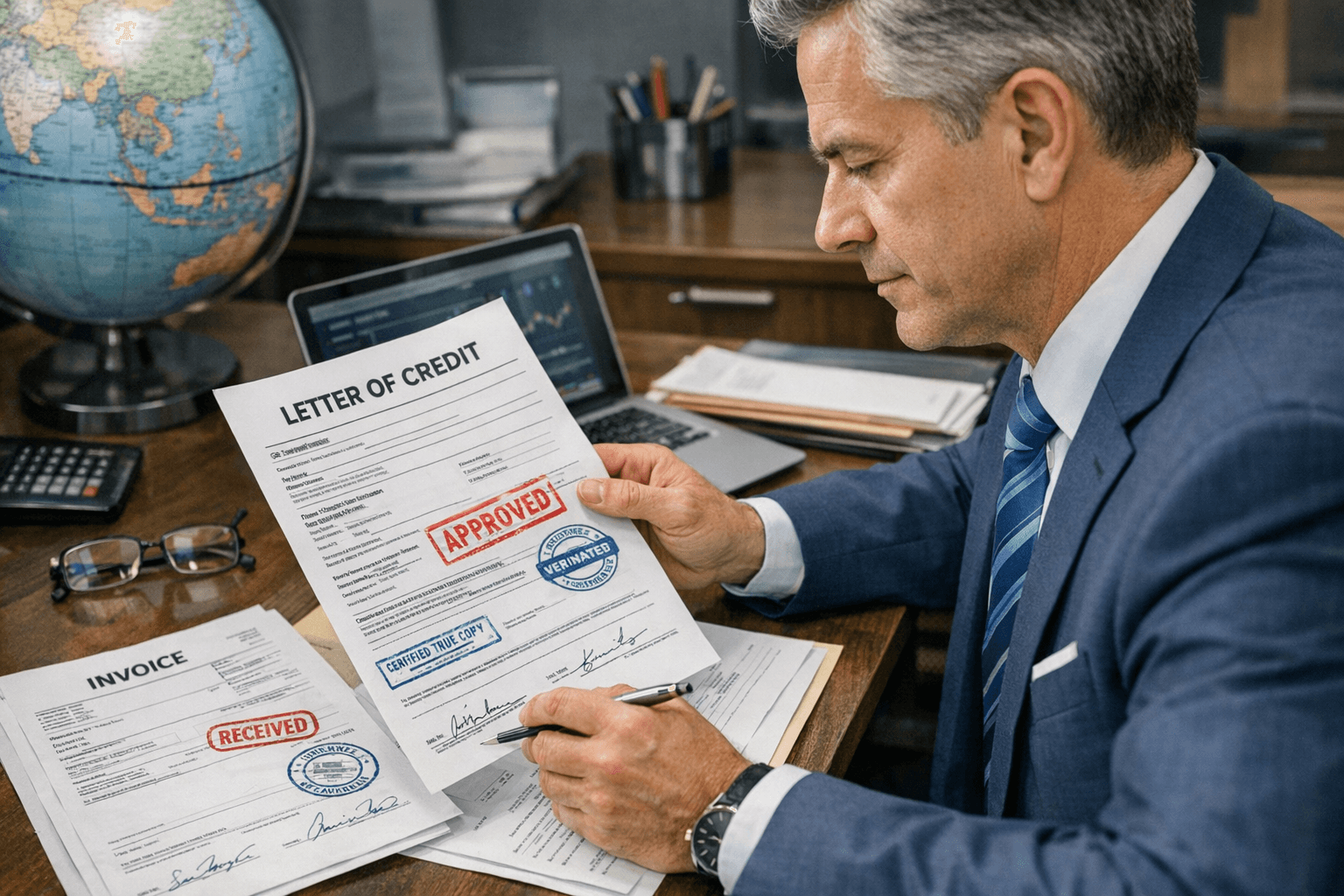
Understanding Letters of Credit
A letter of credit (LC) is a bank guarantee that ensures sellers get paid when they meet specified conditions. It's one of the most secure payment methods in international trade, protecting both parties in the transaction.
How Letters of Credit Work
The Basic Process:
- Agreement: Buyer and seller agree to LC terms in their contract
- Application: Buyer applies for LC at their bank (issuing bank)
- Issuance: Issuing bank creates LC and sends to seller's bank (advising bank)
- Shipment: Seller ships goods and prepares required documents
- Presentation: Seller presents documents to advising bank
- Examination: Banks verify documents match LC requirements
- Payment: If compliant, seller receives payment
- Reimbursement: Buyer reimburses issuing bank
Key Parties Involved
- Applicant: The buyer who requests the LC
- Beneficiary: The seller who receives payment
- Issuing Bank: Buyer's bank that issues the LC
- Advising Bank: Bank in seller's country that forwards the LC
- Confirming Bank: Bank that adds its guarantee (optional)
- Negotiating Bank: Bank that examines documents and pays seller
Types of Letters of Credit
Irrevocable LC (Standard):
Cannot be modified or cancelled without consent of all parties. Most common type.
Confirmed LC:
A second bank (usually in seller's country) adds its guarantee. Provides extra security if seller doesn't trust issuing bank or buyer's country.
Sight LC:
Payment made immediately upon presentation of compliant documents.
Usance/Deferred LC:
Payment made at a future date (30, 60, 90 days) after document presentation. Gives buyer time to receive and sell goods before paying.
Transferable LC:
Beneficiary can transfer all or part of the LC to another party. Useful for trading companies or middlemen.
Back-to-Back LC:
Two separate LCs used when a middleman buys from supplier and sells to end buyer.
Required Documents
The LC specifies which documents the seller must present. Common requirements:
- Commercial Invoice: Matching LC description exactly
- Bill of Lading: Showing shipment details
- Packing List: Contents of shipment
- Certificate of Origin: Where goods were made
- Insurance Certificate: Cargo coverage
- Inspection Certificate: Third-party verification
Common Discrepancies
Documents must match LC terms exactly. Frequent problems include:
- Spelling errors or name mismatches
- Incorrect amounts or quantities
- Late shipment or presentation
- Missing required documents
- Description differences from LC
- Inconsistencies between documents
Discrepancies can delay payment or result in rejection. Review documents carefully before presentation.
Costs of Letters of Credit
Buyer's Costs:
- Issuance fee: 0.5-3% of LC value
- Amendment fees if changes needed
- Commitment fees on the credit line
Seller's Costs:
- Advising fee
- Confirmation fee (if applicable): 0.5-2%
- Negotiation/payment fees
- Discrepancy fees if documents rejected
When to Use Letters of Credit
Good for:
- New trading relationships without trust established
- Large transactions where risk is significant
- Countries with currency or political risk
- When seller needs payment guarantee to secure financing
- Complex transactions requiring specific documentation
May not be necessary for:
- Established relationships with payment history
- Small transactions where LC costs are proportionally high
- Domestic transactions
- Transactions between related companies
Alternatives to Consider
- Documentary Collection: Less secure but cheaper
- Open Account: Buyer pays after receipt (risky for seller)
- Cash in Advance: Seller receives payment before shipping (risky for buyer)
- Trade Credit Insurance: Insurance against non-payment
Letters of credit add cost and complexity but provide unmatched security for international transactions. Use them when the transaction size and risk level justify the investment.
