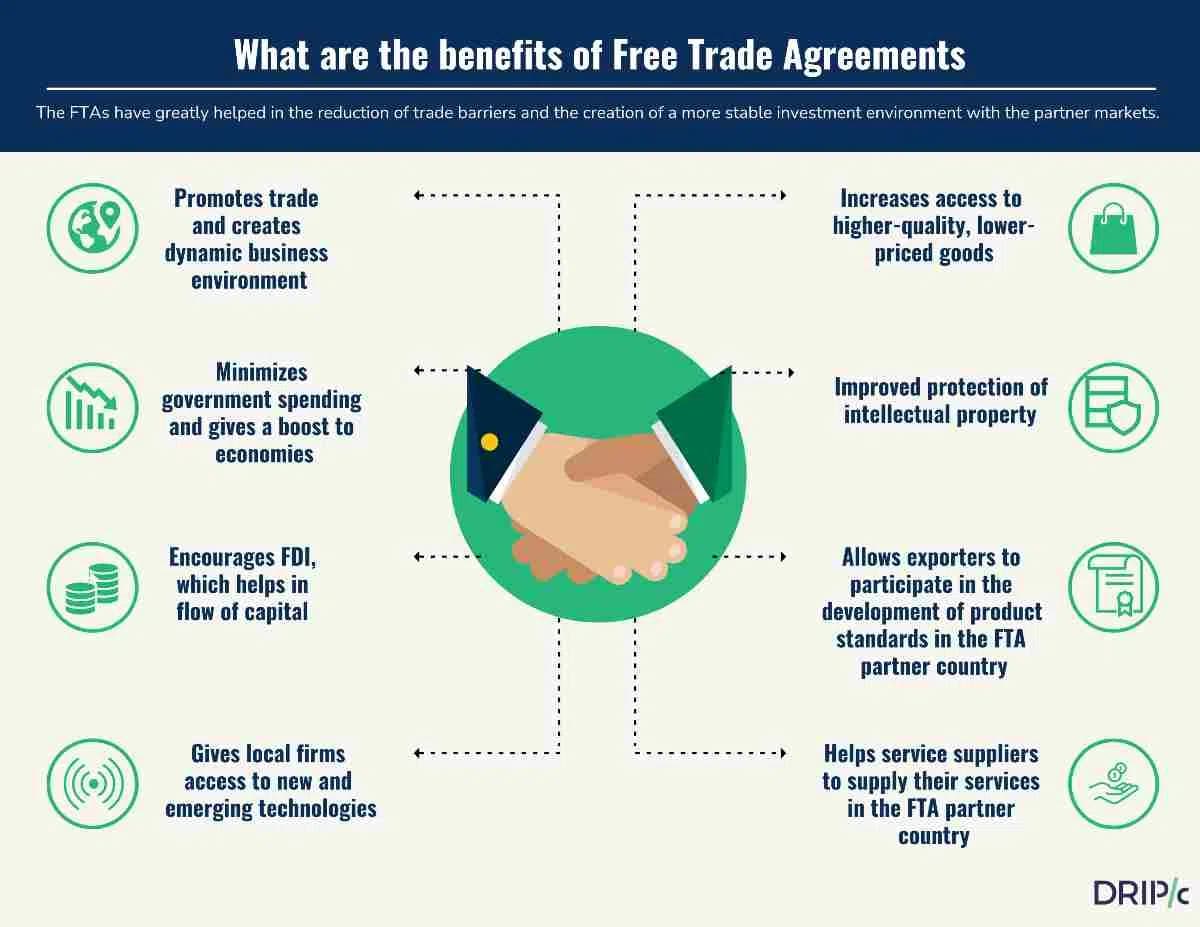
Free Trade Agreements (FTAs) are arrangements between countries that reduce or eliminate tariffs on qualifying goods. Using FTAs effectively can significantly reduce your import costs.
Major U.S. Free Trade Agreements
USMCA (US-Mexico-Canada Agreement): Replaced NAFTA in 2020. Covers trade with our largest trading partners. Most goods qualify for duty-free treatment.
US-Korea FTA (KORUS): Comprehensive agreement eliminating most tariffs on Korean goods.
Other FTAs: Australia, Bahrain, Chile, Colombia, Costa Rica, Dominican Republic, El Salvador, Guatemala, Honduras, Israel, Jordan, Morocco, Nicaragua, Oman, Panama, Peru, Singapore.
How to Qualify for FTA Benefits
Meeting FTA requirements involves three steps:
1. The product must be covered by the agreement (most goods are, but check).
2. The product must meet Rules of Origin requirements - either wholly obtained in the FTA country or meeting specific processing/transformation rules.
3. Proper documentation must be maintained, including certificates of origin and supporting records.
Rules of Origin
This is where most FTA claims fail. Rules of Origin ensure benefits go to goods actually made in member countries, not just transshipped through them.
Common rules include: Tariff shift (product changed classification during manufacturing), Regional value content (minimum percentage of value from FTA countries), and Specific processing requirements.
Documentation Requirements
For USMCA: Certification of origin (can be on commercial invoice or separate document). No specific form required, but must contain required data elements.
For other FTAs: Varies by agreement. Some require specific certificate forms.
Keep records for at least 5 years. Customs can audit FTA claims, and improper claims result in duty collection plus penalties.
Common Mistakes
Claiming benefits without verifying rules of origin. Incomplete or incorrect certificates. Not obtaining supplier certifications. Failing to maintain required records.
Work with your supplier and customs broker to ensure claims are valid before you make them.