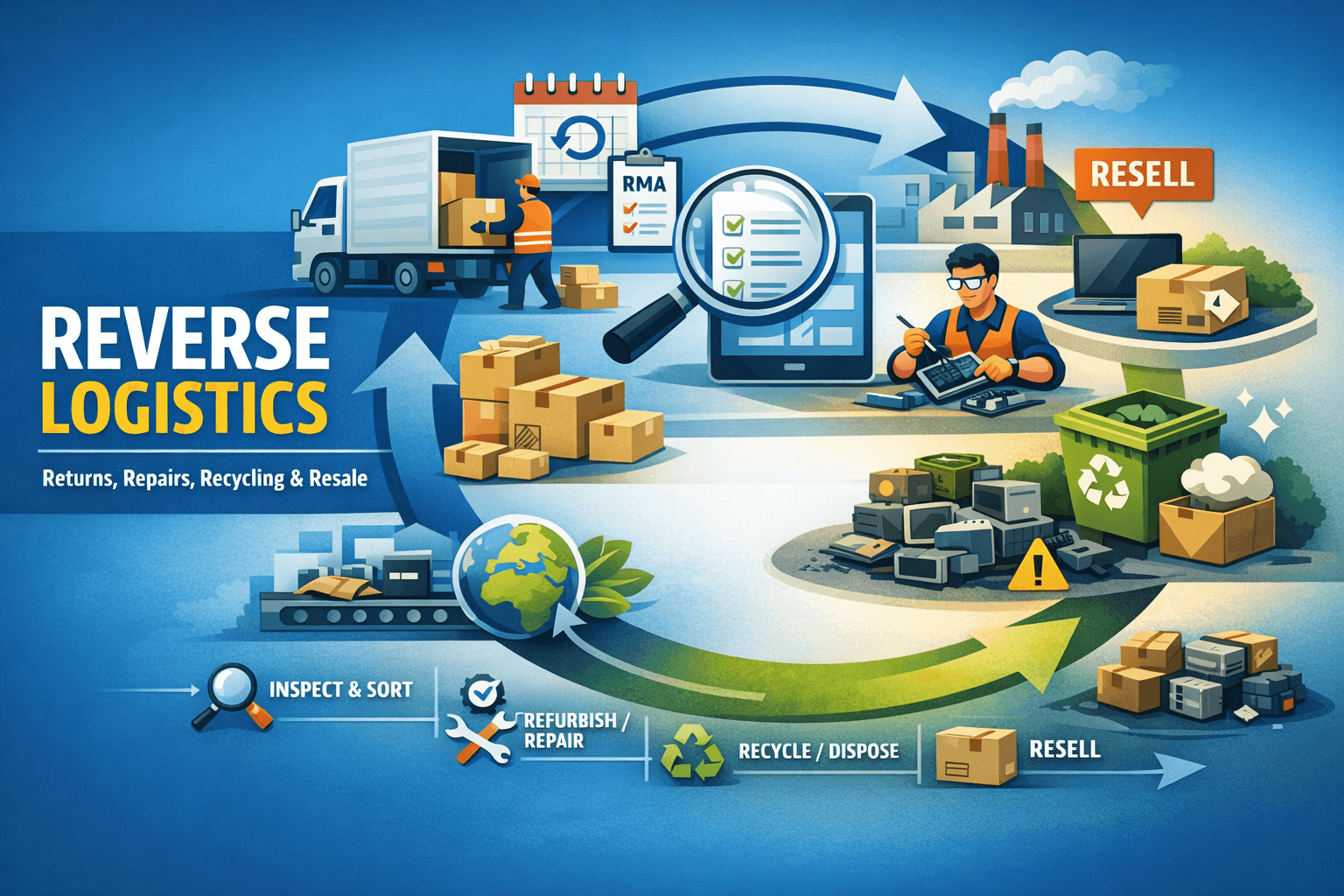
Reverse logistics is a critical but often misunderstood component of modern supply chains. While traditional logistics focuses on moving goods from manufacturers to customers, reverse logistics manages the flow of goods backward—from the customer to the seller, manufacturer, or a designated recovery point.
As global commerce, e-commerce, and sustainability requirements expand, reverse logistics has become a strategic necessity rather than an operational afterthought.
What Is Reverse Logistics?
Reverse logistics refers to all supply chain activities associated with returning products after delivery. This includes returns, repairs, recycling, refurbishment, disposal, and resale.
Unlike forward logistics, which is optimized for speed and cost efficiency, reverse logistics is more complex. Returned goods vary in condition, destination, and value, making standardized processes more difficult.
Common Reasons for Reverse Logistics
Reverse logistics exists for many reasons, including:
Customer returns (incorrect item, dissatisfaction, defects)
Warranty claims and repairs
End-of-life product recycling
Product recalls
Excess or unsold inventory
Reusable packaging or containers
Each scenario requires different handling, documentation, and compliance steps.
How Reverse Logistics Works (Step-by-Step)
While processes vary by industry, a typical reverse logistics flow includes:
1. Return Initiation
A return is triggered by a customer, retailer, distributor, or internal audit. Authorization is often required to control volume and prevent abuse.
2. Collection & Transportation
The product is shipped back through a return channel, which may differ from the original delivery route.
3. Inspection & Sorting
Returned goods are inspected to determine condition:
Resalable
Repairable
Recyclable
Scrap or disposal
4. Disposition Decision
Based on condition and cost analysis, the item is routed to:
Restocking
Refurbishment
Secondary markets
Recycling or compliant disposal
5. Data Capture & Reporting
Return reasons, costs, and recovery value are logged to improve forecasting, product design, and customer experience.
Who Uses Reverse Logistics?
Reverse logistics is widely used across multiple industries:
Retail & E-Commerce
High return volumes make reverse logistics essential for profitability, customer satisfaction, and inventory accuracy.
Manufacturing
Manufacturers manage warranty returns, defective components, recalls, and reusable packaging.
Electronics & Technology
Devices require specialized reverse flows due to data security, hazardous materials, and refurbishment potential.
Automotive & Industrial
Core returns, remanufacturing, and parts recovery depend heavily on reverse logistics.
Healthcare & Pharmaceuticals
Strict compliance governs returns, recalls, and disposal of sensitive or expired products.
Why Reverse Logistics Matters
Effective reverse logistics delivers tangible business value:
Cost recovery: Salvage value from returned goods
Customer trust: Faster, smoother return experiences
Sustainability: Reduced waste and improved recycling
Regulatory compliance: Proper handling of restricted materials
Operational intelligence: Data-driven product improvements
Poorly managed reverse logistics, on the other hand, increases costs, creates compliance risk, and erodes margins.
Reverse Logistics vs. Forward Logistics
Forward LogisticsReverse LogisticsPredictable flowsVariable, inconsistent flowsOptimized routesAd-hoc routingNew productsMixed-condition productsRevenue focusedCost recovery focused
Because of this complexity, reverse logistics often requires dedicated systems, workflows, and expertise.
The Role of Technology in Reverse Logistics
Modern reverse logistics increasingly relies on:
Return management systems (RMS)
Inventory visibility platforms
Data analytics and AI forecasting
Compliance and audit automation
Integrated transportation management
Technology transforms reverse logistics from a cost center into a measurable, optimizable function.
Final Thoughts
Reverse logistics is no longer optional. As return volumes rise and sustainability expectations increase, organizations that invest in structured, technology-driven reverse logistics gain a competitive advantage.
Understanding how reverse logistics works—and designing it intentionally—helps businesses protect margins, meet regulatory obligations, and build stronger customer relationships.