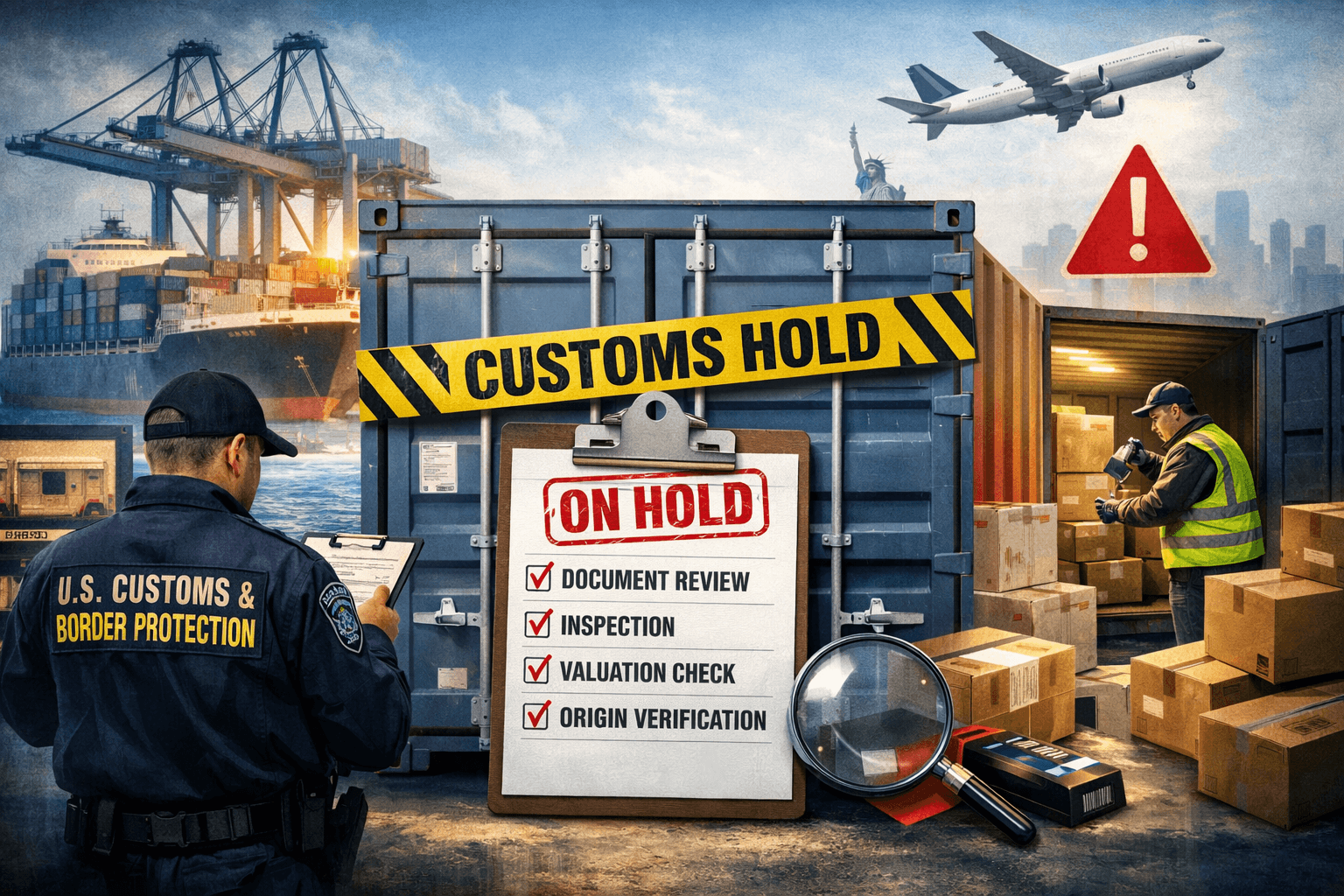
What Is a Customs Office?
A customs office is a government authority responsible for enforcing a country’s import and export laws at ports of entry. These offices regulate what goods may enter or leave a country, ensure duties and taxes are correctly paid, and enforce trade, safety, and security regulations.
In the United States, import enforcement is carried out by U.S. Customs and Border Protection, a federal agency within the Department of Homeland Security.
CBP operates at:
Seaports
Airports
Land border crossings
Inland examination facilities
Not all shipments are physically inspected, but all shipments are legally subject to review.
What Is the Office of Field Operations (OFO)?
Within CBP, frontline cargo enforcement is handled by the Office of Field Operations (OFO).
OFO officers:
Review import documentation
Select shipments for inspection
Enforce tariff, trade remedy, and safety laws
Release or hold cargo
OFO has authority to:
Request additional documents
Order exams (X-ray or physical)
Detain or seize merchandise
Assess penalties or refer cases for investigation
Most customs holds originate from OFO review decisions.
What Is a Customs Hold?
A customs hold occurs when CBP temporarily prevents a shipment from being released while it conducts further review.
A hold may apply to:
Documentation only (paperwork review)
Non-intrusive inspection (X-ray)
Intensive physical examination
A hold is not a penalty. It is an enforcement and verification mechanism.
Common Reasons Shipments Are Held
1. Documentation Errors or Inconsistencies
The most frequent cause of holds is incorrect or inconsistent paperwork, including:
Invoice values that do not match filings
Missing or vague product descriptions
Incorrect consignee or importer details
Discrepancies between invoice, packing list, and bill of lading
Even minor clerical errors can trigger a review.
2. Tariff Classification Issues
If a product’s tariff classification appears incorrect or ambiguous, CBP may place a hold to verify:
Proper HS code usage
Duty rate accuracy
Applicability of trade remedies
Misclassification can materially affect duty liability and enforcement exposure.
3. Customs Valuation Concerns
CBP closely reviews declared values to ensure duties are calculated correctly.
Holds may occur if:
Values appear unusually low
Assists, royalties, or tooling are not declared
Related-party pricing raises transfer valuation questions
Valuation enforcement is a major compliance priority.
4. Country of Origin Verification
Country of origin determines:
Duty rates
Eligibility for trade agreements
Exposure to additional tariffs
If origin claims are unclear or unsupported, CBP may request proof such as manufacturing records or supplier declarations.
5. Trade Remedies and Restricted Goods
Shipments may be held if they potentially fall under:
Antidumping or countervailing duties
Quotas or tariff-rate quotas
Sanctions or restricted party controls
Certain commodities are also subject to partner government agency (PGA) review, including food, medical devices, chemicals, and electronics.
6. Random or Risk-Based Selection
CBP uses automated risk targeting systems. Even fully compliant shipments may be selected for:
Random inspection
Pattern-based analysis
Supply chain risk assessment
Selection does not imply suspicion; it reflects enforcement protocols.
What Happens During a Hold?
Once a hold is issued, CBP may:
Request additional documents
Order a non-intrusive scan
Require a physical examination
Refer the shipment to another agency
The shipment remains under customs control until CBP issues a formal release.
Timeframes vary from hours to several weeks, depending on the issue.
How Holds Affect Importers
Customs holds can result in:
Storage and demurrage charges
Missed delivery commitments
Increased scrutiny on future shipments
Repeated compliance issues may elevate an importer’s risk profile.
Key Takeaway
Customs holds are a normal part of global trade enforcement—not an exception.
They occur to:
Verify compliance
Protect revenue
Enforce safety and trade laws
Understanding why holds happen and how customs offices operate allows importers and exporters to reduce disruption, respond effectively, and build more resilient supply chains.